

- News
- Kyoto Deep Tech.
Meet “Peers” and Turn Research Ideas into Business Ventures: Kyoto Deep Tech Commercialization Support Project Holds Information Session for Researchers

The City of Kyoto, Ribanes Co., Ltd., and the Kyoto Advanced Technology Research Institute (ASTEM), a public interest incorporated foundation, will hold an event on Thursday, June 18, 2026, titled “Reiwa 8 Kyoto Deep Tech Commercialization Support Project"We held an online information session for researchers on [...].
This project brings together researchers from universities and research institutions based in Kyoto City and aspiring entrepreneurs from across the country to form teams and advance the commercialization of research findings for practical application in society.
At the information session, Kenji Matsuura of Kyoto University—who formed the startup team “WILFood” through last year’s program—and aspiring entrepreneur Tomohiro Fukagara took the stage. They shared their firsthand experiences of how researchers and aspiring entrepreneurs came together and engaged in repeated discussions toward commercializing their ideas.
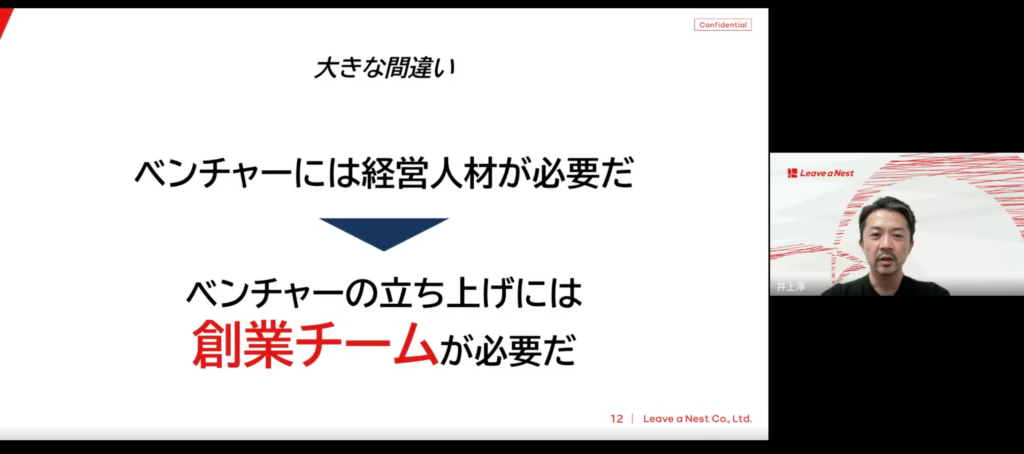
We Need a “Founder Team,” Not “Management Talent”
At the start of the event, Kiyoshi Inoue, President and CCO of Ribanes Co., Ltd., took the stage. Inoue described the current situation, noting that while the number of university-spun-off ventures in Japan is increasing, many startups are facing challenges in securing management talent. However, this challenge goes beyond simply a “shortage of management talent.”
Researchers are looking for “people who can commercialize their technology,” while aspiring entrepreneurs are hoping for “technology that can be commercialized immediately.” Commercialization cannot move forward based on these one-sided expectations alone. What is needed is to form a “startup team” in which researchers and aspiring entrepreneurs share a common vision for the future and tackle challenges by pooling their respective expertise.
Inoue emphasized that this project is not merely a venue for bringing together research ideas and potential entrepreneurs. Rather, it is designed to be a place where participants can meet like-minded partners with whom they can think and act together toward the societal implementation of research findings.
The Challenge of Turning Unused Wood into a Food Resource Using Termites
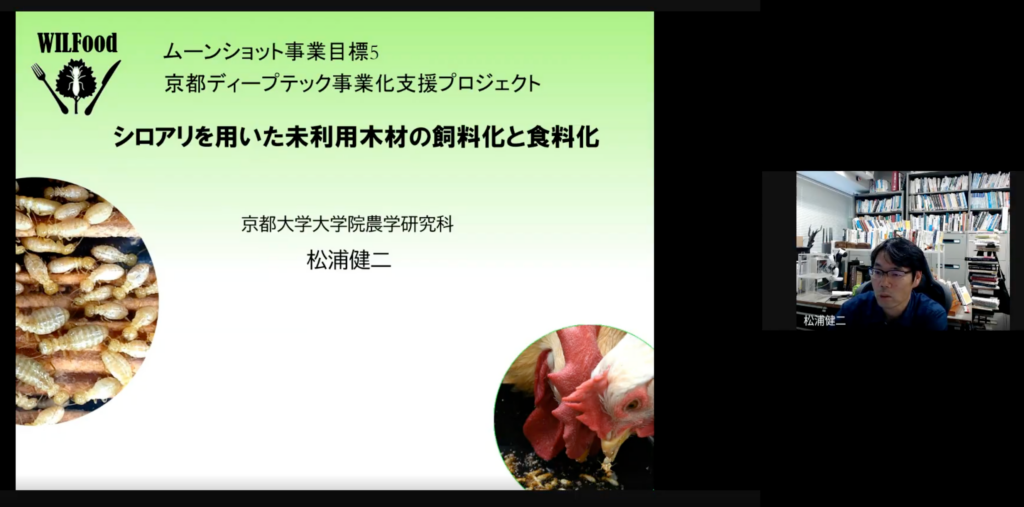
Next, Professor Kenji Matsuura of the Graduate School of Agricultural Science at Kyoto University, who participated in last year’s program, introduced the “WILFood” project he is leading.
WILFood is a project that aims to convert underutilized woody biomass and other materials into insect protein through termite activity, and to utilize it as feed for livestock and aquaculture. As a research initiative addressing multiple social challenges—including the effective use of forest resources, sustainable food production, and the circular use of local resources—studies are underway to explore its commercialization.
Professor Matsuura reflects that while his research team had a robust structure, he had limited opportunities to interact with partners who could help advance commercialization efforts. Although universities have industry-academia collaboration departments and technology transfer offices, there are few opportunities to meet aspiring entrepreneurs who are seriously committed to working together on the practical implementation of research findings and to engage in ongoing discussions with them.
Through his participation in this program, Mr. Matsuura formed a founding team with aspiring entrepreneurs and Ribance communicators. By gaining a perspective on commercialization—one that is difficult to obtain as a researcher alone—and establishing connections with the local community, the project, which had been in the conceptual stage, evolved into a concrete business plan.
Currently, discussions are underway regarding collaboration with local governments and the establishment of demonstration sites, and efforts to implement research findings in society are making steady progress.
Supporting conversations to help people find friends
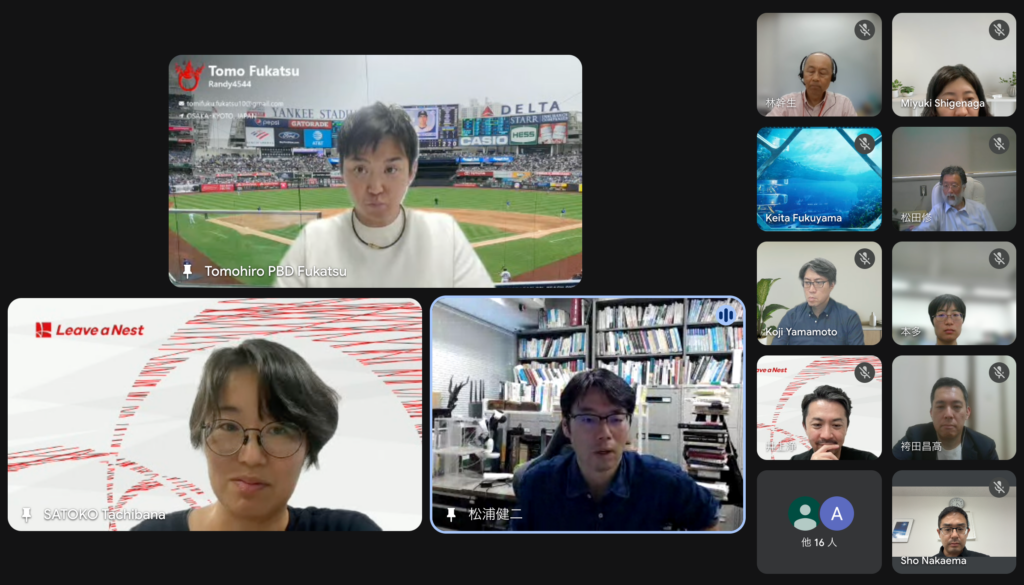
During the roundtable discussion, last year’s participants shared their perspectives on the value of the “space” provided by this program.
Mr. Fukagara, who joined WILFood as an aspiring entrepreneur, reflected that—given the limited opportunities to meet researchers—a program like this, where he could engage with multiple research ideas and discuss them on an equal footing, was invaluable. He explained that by combining his own understanding of the challenges—rooted in his background in the timber industry—with Mr. Matsuura’s research, he was able to identify new business opportunities.
On the other hand, simply bringing researchers and aspiring entrepreneurs together does not automatically result in the formation of a team. It requires a process of identifying shared goals while gaining an understanding of each other’s ways of thinking, values, and approaches to commercialization.
Mr. Matsuura also noted that, when it comes to a founding team, it’s not just about ability and expertise—it’s also important to consider whether people can “move forward together as teammates.” No matter how highly skilled someone may be, if they can’t take on challenges while envisioning the same future, they won’t form a strong team.
Supporting these dialogues are the Ribane communicators who accompany the program. Acting as intermediaries between researchers and aspiring entrepreneurs, they help both sides clarify their perspectives while facilitating discussions aimed at commercialization. A key feature of this program is that it goes beyond simply matching research opportunities with aspiring entrepreneurs; it is designed to foster dialogues that help participants find “partners to build a business with.”
Let’s Envision the Future Beyond Our Research Findings Together
The Kyoto Deep Tech Commercialization Support Project provides support for the formation of startup teams and the commercialization of research findings to researchers affiliated with universities and research institutions based in Kyoto City.
I want to share my research findings with society. But I’m not sure how to go about commercializing them. I’d like to meet partners who are willing to take on this challenge with me.
For researchers who feel this way, this project should serve as the first step toward turning their research potential into a business venture. We also offer individual consultations prior to application, allowing you to discuss and explore potential paths to commercialization based on your research and interests.
The application deadline is 6:00 p.m. on Tuesday, June 30, 2026. If you are looking for colleagues to help bring the future shaped by research to life, we encourage you to consider applying.
<>
*Please review the project details before applying.
<>
*The entry deadline is 6:00 p.m. on Tuesday, June 30.
*Entries for the 2026 fiscal year are now closed.
▼Contact Information
Lifeness Co., Ltd. Contact: Nakaema and Tachibana
MAIL:[email protected]
 English
  Japanese