

- Interview with Adventure Talent
- News
Stepping on the gas to become someone who applies ethics to the advancement of science and technology
This article is a re-edited version for online publication, based on an interview originally featured in Volume 27 of the “Human Resources Support” booklet, “The Turning Point of 2025,” published in March 2025.
Speaker
Haruna Kai
University of Tsukuba, School of Humanities and Cultural Studies, Department of Humanities
Born in 2006. After passing the Admissions Center entrance exam, he enrolled in the Department of Humanities within the School of Humanities and Cultural Studies at the University of Tsukuba. He is interested in philosophy and ethics, particularly bioethics and medical ethics, and his research focuses on decision-making in healthcare.
I have engaged in multiple research projects, both individually and collaboratively, and have experience submitting papers to international academic journals and presenting at academic conferences. Before entering college, I worked as an intern in the Research and Development Division at Lifeness Co., Ltd., where I was involved in organizing hands-on science workshops and interdisciplinary academic conferences.
Interviewer
Hiroyuki Takahashi
Leave a Nest
Director, Center for Knowledge-Based Entrepreneurship Research
In 2009, he completed the doctoral program at Yokohama City University Graduate School. He holds a Ph.D. in Science.
In addition to launching the “Lifeness Research Grant” for young researchers under the age of 40, he is engaged in activities that connect industry with young researchers to foster new research projects.
In addition, the company is promoting the creation of mechanisms to foster the seeds of research and development, such as the “Interdisciplinary Academic Society”—a forum for generating new knowledge by combining individuals’ knowledge, skills, and passion for problem-solving across disciplinary and organizational boundaries—and the establishment of research centers dedicated to the practical application of knowledge creation.
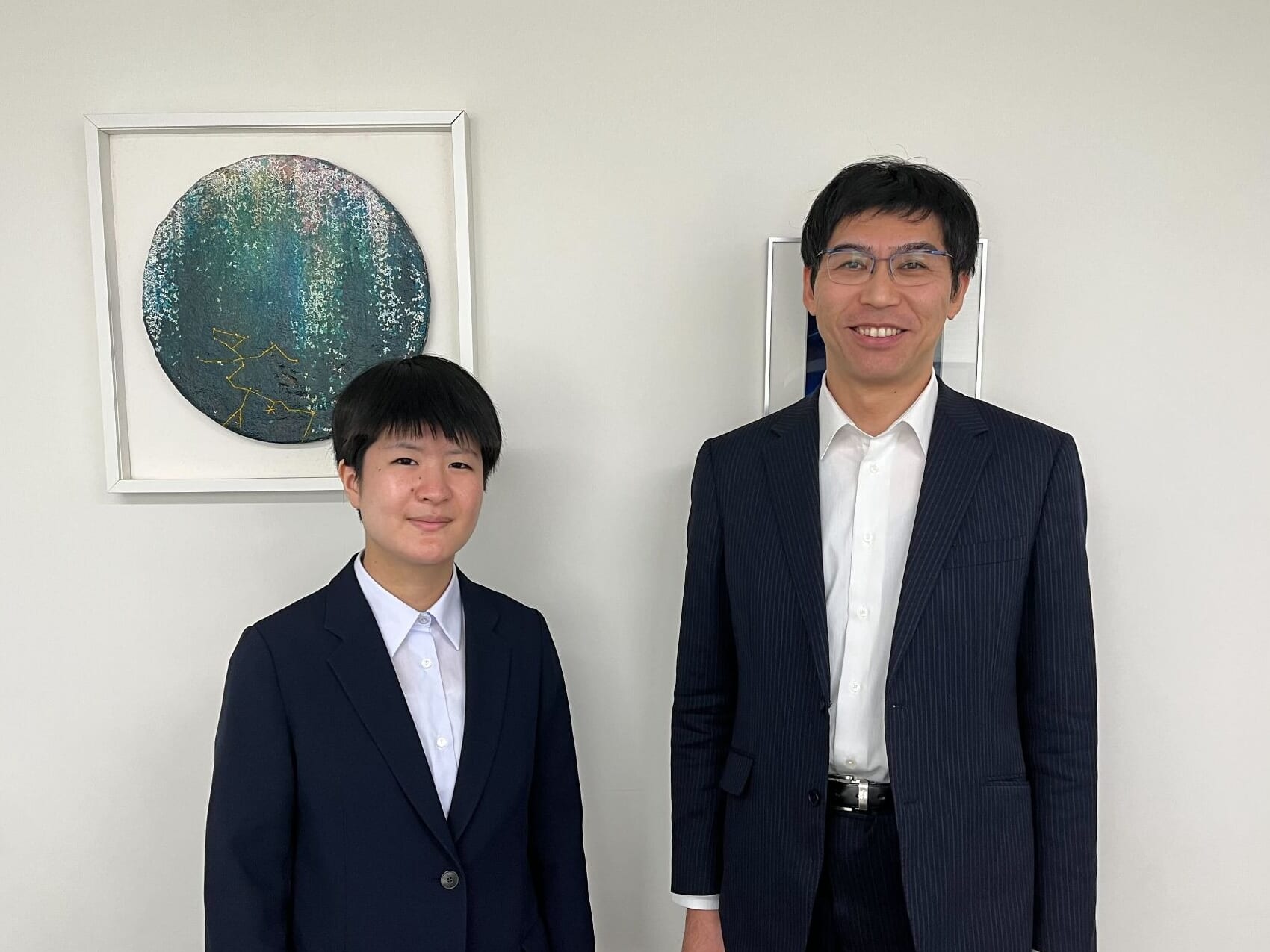
Since elementary school, Haruna Kai has been energetically pursuing various activities driven by her curiosity about the disconnects in the relationship between people and society. In high school, she began conducting research in the field of medical ethics. We spoke with Ms. Kai—who is already making her mark as a cutting-edge researcher, having published several papers in international journals—about her journey and her future prospects.
My Own Psychological Changes Led Me to Research in Medical Ethics
Takahashi:Mr. Kai, you submitted a paper to an international journal as a co-author when you were 17, didn’t you? Could you please tell us what led you to begin researching bioethics—a branch of philosophy that deals specifically with medicine and life?
Kai:Since both my parents are researchers, I grew up in an environment where science was a natural part of my life. When I was in elementary school, I was passionate about building things. Starting in third grade, I became so absorbed in it that I even competed in national robot contests with my friends. We worked in teams of three to build a single radio-controlled car, programming it to perform certain maneuvers and race to the finish line within a set time limit. However, I made a mistake at the national competition. I couldn’t execute moves that had gone smoothly during practice, and we ended up running out of time. I felt a strong sense of frustration that I hadn’t been able to do what I knew I was capable of, and I blamed myself terribly.
Takahashi:I don't think it's just my responsibility when it comes to a team effort, but I guess I ended up blaming myself.
Kai:Yes. I remember walking home from school, wondering why the world was so painful and why I kept blaming myself. It was during that time that I discovered waka poetry. I learned the Hyakunin Isshu in fourth grade, and I was deeply drawn to the 99th poem. The poem goes: “People criticize me, and I resent them; for I find this world so unfulfilling—thus I, lost in thought.” I was surprised to learn that even someone as exalted as the retired emperor felt that the world was unfulfilling. It made me realize that my own worries were perfectly normal, and that lifted a weight off my heart. That experience sparked my deep immersion in literature. Looking back now, I think my interest wasn’t in the waka poems themselves, but rather in the philosophy behind them and the feelings they expressed toward the world.
Takahashi:I was surprised to learn that your experience at a robotics competition led to an interest in waka poetry and literature. I’m curious to know how that interest eventually evolved into an interest in bioethics.
Kai:I first encountered ethics when I became a high school student. I had been somewhat reluctant to attend school even before that, but eventually I dropped out and chose to earn my high school equivalency diploma. At that time, among the social studies exam subjects, I chose ethics. Through the fields of ethics and philosophy, I learned about existentialism—the idea that “human nature is not predetermined, and we are beings who carve out our own paths in life”—and became interested in the debates of those who came before me. My interest in bioethics was sparked by the COVID-19 pandemic. At a time when close contacts were still hesitant to go out, I developed a high fever of over 40°C. Since this coincided with my younger brother’s important game, my parents were initially unsure whether to take me to the hospital. In the end, they took me to the hospital, but I realized that even though, from a rational standpoint, I should have gone to the hospital immediately, the decision to seek medical care is influenced by various factors and is not always a purely rational one.
Takahashi:How did your experience of reflecting on the nature of rationality in healthcare lead to your research?
Kai:This study, which combines a literature review with interviews with those directly involved, examines why religious objections to blood transfusions occur and what kind of decisions the individuals themselves make. I had a friend whose entire family belonged to a certain religious group, but she seemed to be struggling because her values regarding attending college differed from those of her parents and the religious group. Upon asking her more about it, I learned that, for religious reasons, she was unable to receive certain medical procedures, such as blood transfusions. My friend also carried a card stating that she “does not wish to receive a blood transfusion.” Realizing that a wider range of factors than I had imagined influences decisions regarding medical treatment, I decided to focus my research specifically on the relationship between religion and medicine.
Takahashi:I’ve heard that, depending on the religion, discussions aren’t limited to the refusal of blood transfusions but also extend to how scientific and technological advancements—such as regenerative medicine—are accepted. How new scientific and technological advancements are embraced within diverse religious perspectives is certainly one of the key issues for the world moving forward.
Kai:I was also able to conduct interviews with current and former members of the religious group in question through referrals from friends and contact via social media. As my research progressed, I realized that even within the same group, people hold a variety of viewpoints, and I came to see the folly of trying to understand people by lumping them together based on their attributes.
Religion deals with the spiritual aspect of life—the sense of purpose—while medicine takes a biological approach focused on enabling people to live, so they may seem to occupy opposing positions. However, there is a growing trend in modern medicine to incorporate spiritual care, and I think this coming together is a wonderful development. I, too, would like to take steps toward this convergence from my own perspective and strive to build a relationship where we can complement one another.
My Internship at Libanes: Where I Saw the Essence of Activities That Bridge Society and Research
Takahashi:I’m so happy that Mr. Kai, who shares this mindset, has joined us at Lifeness as an intern. What led you to discover Lifeness?
Kai:A friend invited me to a seminar that supports innovative research by middle and high school students, and there I met someone from Ribane who was serving as a mentor. I remember being overwhelmed by the fact that the seminar was attended exclusively by researchers who were at the forefront of their respective fields among middle and high school students. It was striking to see that even people like them shared similar concerns—such as the difficulty of explaining their research to people outside their field and the challenge of balancing research with their studies.
Takahashi:Why did you participate in the Ribane internship?
Kai: A major reason was that I wanted to understand how research and society are connected. In particular, since much of the humanities research I’m pursuing doesn’t tend to generate much revenue, I was interested in how it connects to society. That’s why I wanted to learn more about Ribboness’s activities, which bridge research and society. After actually getting involved, I realized that Science Bridge Communication is truly groundbreaking.
Takahashi:I see! That’s exactly it—Ribane’s Science Bridge Communication was born out of a desire to bridge the gap between research and society and solve the world’s challenges. I’m curious to know what you found groundbreaking about it from your perspective, Mr. Kai.
Kai:This happened when I participated in an experimental workshop project that Ribane conducted with a bank late last year. Before the project began, I thought there was a huge gap between the banking industry and research, so I wondered how we would bridge that gap. As our meetings continued, when the Lifeness staff explained the significance and potential of the research we wanted to convey to the children in the experimental workshops—using “community development” as our starting point—the bank representatives strongly identified with our vision. From that point on, we were able to work together toward a shared goal. Honestly, it was a huge surprise and revelation to me that we were able to share a perspective I had thought could only be understood among fellow researchers.
Takahashi:That sense of trying to build empathy by seeing things from the other person’s perspective is an important insight. I, too, feel that society’s expectations of researchers amount to saying, “Turn your research findings into money.” However, since I believe researchers possess the potential to create something of lasting value, I felt uneasy about a perspective that prioritizes the immediate, short-term view. I think it’s important for researchers to reach out to people outside the academic community to help them understand this.
Kai:A similar situation exists in the field of medical ethics. For example, doctors often think that ethicists “don’t understand the realities of the clinical setting at all,” while ethicists, in turn, think that doctors “don’t understand ethics at all.” Observing this, I realized that we need research capable of building a bridge between healthcare professionals and ethicists. It may be difficult, but I aspire to become a practice-oriented philosopher who can build that bridge and guide us toward the best possible outcomes for patients.
Takahashi:I think the key point is that a solid bridge can only be built once we understand both our own and the other person’s foundations. The concept of “Science Bridge Communication” seems likely to become a very important element in bioethics as well.
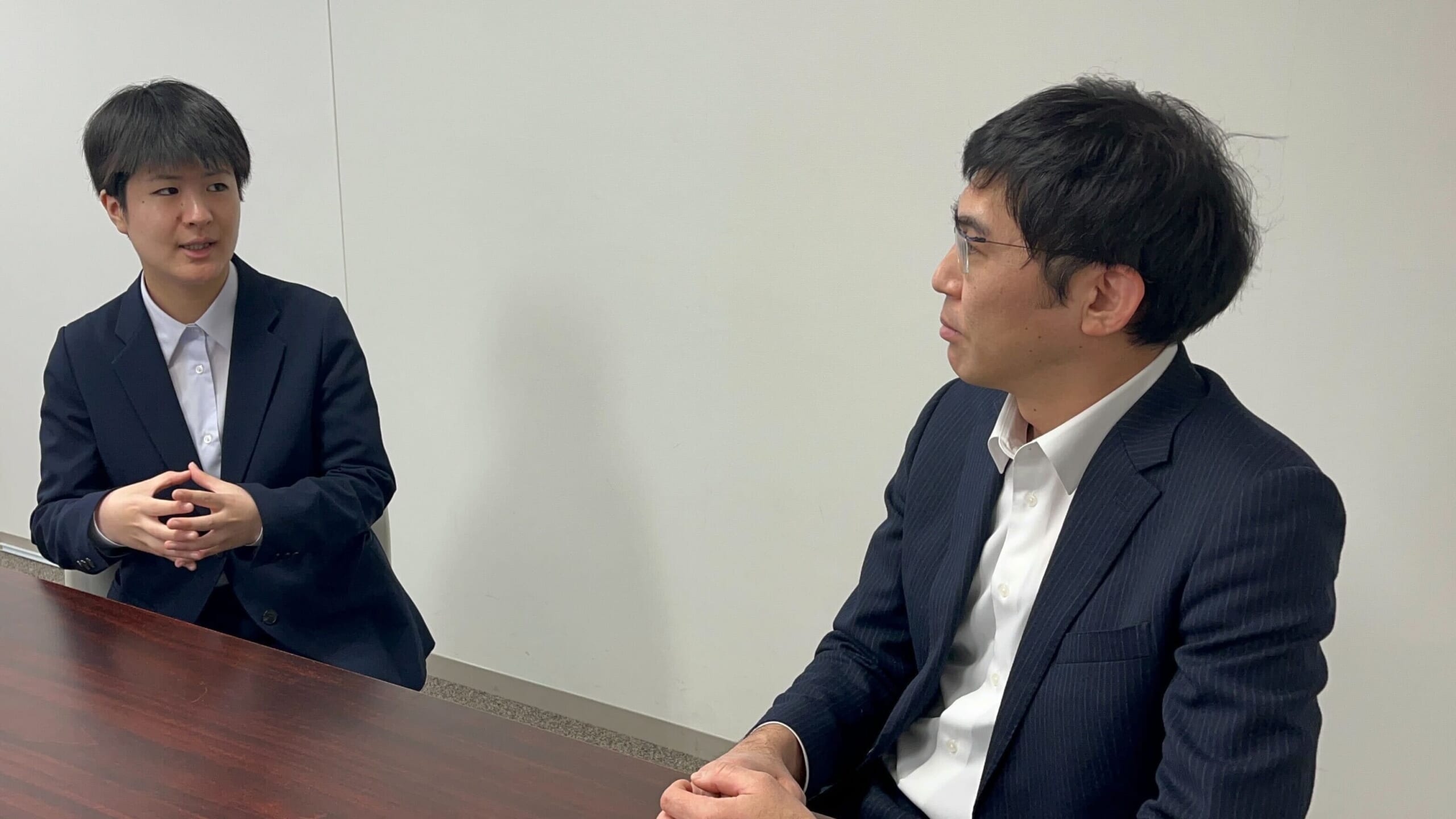
To solve the challenges of today, I want to take on the challenge of pursuing “autonomy.”
Takahashi:Starting in April, you'll be taking on new challenges at university. I think you'll be able to delve into the field of bioethics, as well as philosophy, which you're interested in.
Kai:That’s right. As I continue to study philosophy, I’d like to take my thinking to a slightly more abstract level. Until now, my research has focused on organizing the background and circumstances surrounding why people refuse treatment—it has been based on real-world examples. Going forward, I’d like to delve deeper into the concept of “autonomy” as an individual—a fundamental principle of bioethics—as an academic discipline.
Takahashi:I think one of the interesting aspects of research is moving back and forth between concrete examples and abstract discussions. Could you tell me in more detail why you decided to make “autonomy” your key concept?
Kai:Research has shown that what lies between religion and medical ethics is not only an individual’s way of thinking but also interpersonal relationships. Even within the religious group I mentioned earlier, there have reportedly been instances where members who received blood transfusions were ostracized, or where members who had not explicitly stated their wish to refuse blood transfusions were urged to do so. As such, there are situations in which people, due to the influence of interpersonal relationships and their environment, are unable to make autonomous decisions as individuals. Consequently, a concept that has garnered attention in bioethics in recent years is “relational autonomy”—the idea of understanding autonomy within the context of relationships with others. I feel that in the coming era, it will become increasingly important in bioethics to consider “autonomy” in light of interpersonal relationships and specific circumstances, and at times, to broaden its definition.
Takahashi:Is this a sense of crisis that, unless we develop ethics and philosophy that reflect reality, the gap between ethics, research, and society will continue to widen until it becomes irreparable?
Kai:In fact, when it comes to defining autonomy within the context of highly complex human relationships, there are still many things we need to consider and learn. For example, even when we talk about understanding autonomy in human relationships in general, there are several different schools of thought. We haven’t yet figured out how to define autonomy in a way that incorporates all of them. But that’s exactly why I’m so excited about it.
For me, research is a dialogue.
Takahashi:I’m really looking forward to Mr. Kai’s future research. You mentioned that you aim to be a practical researcher who bridges the gap between medical professionals and ethicists—what kind of world do you hope to create as you share your research findings with society?
Kai:While science and technology continue to advance and various technologies are being introduced into society, I feel that ethical consideration remains insufficient. This is because I believe that in a truly technology-driven world, it is important to carefully examine whether the direction in which each individual technology is being utilized is ethically sound.
Takahashi:Ribane’s vision is “to advance science and technology and contribute to the planet.” I felt a sense of anticipation that their activities would indeed take that direction. What is it about this research that fascinates you so much, Mr. Kai?
Kai:What I enjoy most about research is the process itself. I formulate my own research questions and pore over the literature. When I find my own thoughts already put into words, I feel a sense of joy—like, “That’s exactly it!”—and when I come up with an idea that hasn’t been addressed in previous research, I sense potential there as a research topic, which also brings me joy. I think whether you enjoy literature reviews is a matter of personal preference, but I find them very enjoyable. Perhaps it’s because this research process is so similar to a dialogue. Interviews are a form of dialogue, and I view reading the literature as a dialogue with the researchers who wrote it.
Takahashi:It’s interesting how research and dialogue feel so similar. I can really relate to that, since through my research in the life sciences, I’ve learned from my professors and senior colleagues about proper etiquette and how to approach the research process. Listening to Mr. Kai today, I was reminded once again that—even though our fields differ—his passion aligns with our own desire to solve societal challenges through science and technology. Let’s continue to work together on this.
(Written and Compiled by Ura)
 English
  Japanese