

- Interview with Adventure Talent
- News
Water Hyacinth: Bridging the Environment and Food—Creating Industries That Foster Happiness for Ourselves and Others
This article is a re-edited version for online publication, based on an interview originally featured in Volume 30 of the “Human Resources Support” booklet, “The Turning Point of 2025,” published in December 2025.
Speaker
Ms. Moana Kitamura
Floatmeal, Inc. Representative Director and CEO
Born in New Zealand to Japanese parents, he was raised in Australia. At the Graduate School of Fisheries Sciences, Hokkaido University, he researched the impact of environmental changes in the Arctic Ocean on marine ecosystems. While conducting research on climate change, he came to believe that “securing a sustainable food supply for the future will lead to the preservation of the global environment.” He met Kamal Sajjad, who was conducting research on duckweed at the university. Intrigued by the potential for mass production technology and commercialization of duckweed—which is gaining attention as a next-generation food resource—he founded Floatmeal, Inc. in May 2023 while still enrolled in his master’s program.
Interviewer
Yoshifumi Kawana
General Manager, Human Resources Development Division, Ribanes Co., Ltd.
He earned a Ph.D. in Environmental Science from the Graduate School of Environmental Information Science at Yokohama National University. In 2008, he became a lecturer at Yokohama National University’s VBL program and founded LD Factory Co., Ltd., a subsidiary of Ribance Co., Ltd. He joined Ribance in 2014. To date, he has participated in the management of four group subsidiaries—including Agrinome Research Institute, Inc. and KAKAXI, Inc.—as a director. He is involved in launching new businesses related to agriculture, forestry, and fisheries, such as plant factory operations, food and beverage businesses, and support for agritech ventures.
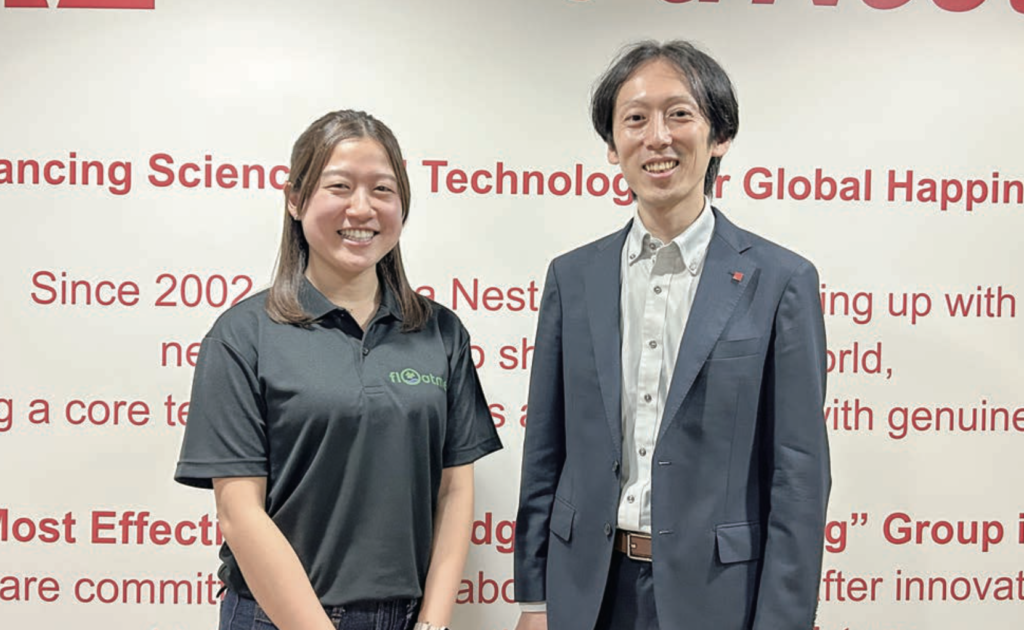
The challenge of changing society and the environment isn’t one that falls solely on the shoulders of the first person to take the plunge. The “second penguins”—those who follow in the footsteps of entrepreneurs, often referred to as “first penguins,” and move forward while engaging those around them—can sometimes be the ones who drive the next era. Moana Kitamura, CEO of Floatmeal, is working with friends she met in college to promote cultivation techniques that enable the industrial-scale use of nutrient-rich duckweed as a protein source, with the goal of creating a new food supply model that is kind to both the environment and people. The source of her energy, as she continues her work with such vigor, is actually a simple desire: “I want to be happy.”
Tackling Environmental Issues Through Food
Kawana:We first met in the fall of 2022 at the AgriTech Grand Prix, didn’t we? I remember being impressed by how you were holding a sample of duckweed powder.
Kitamura:Yes, I was a junior in college at the time. It wasn’t yet a company, and Sajjad, our current CTO, was giving the presentation as the representative. I was frantically working behind the scenes to put together a presentation—something I wasn’t used to doing—and looking back now, I realize how inexperienced I was.
Kawana:Back then, there wasn’t even enough duckweed powder to eat, but now it’s being marketed as a food product—it’s really taken off over the past three years. I believe you were part of the Faculty of Fisheries Sciences at Hokkaido University at the time—how did you end up joining Floatmeal?
Kitamura:It all started when I was a sophomore in college and had the opportunity to work as a staff member for the “Hult Prize,” a student entrepreneurship program. There, I approached the members of Floatmeal—a team of international students who were making a big impact—and we hit it off; they invited me to join them. I thought that if I joined this team, I’d be able to “make a difference for the environment,” so at first, I planned to give it my all for just two months during spring break. Before I knew it, I was completely absorbed in it, and here I am today.
Kawana:It’s true that things often start with a hunch, isn’t it? However, while I remember seeing you conducting research in the Arctic during your master’s program, you’re now working as the CEO of a startup focused on duckweed. Could you tell me what sparked your interest in the ocean and the environment?
Kitamura:Inspired by an oceanographer I met at a research center in Australia when I was a child, I enrolled in the Faculty of Fisheries Sciences at Hokkaido University to study the ocean. After entering university, I discovered oceanography and was deeply drawn to the perspective of viewing the entire Earth as a single system through the lens of the ocean, which led me to begin my research. In addition to oceanography, as I was exposed to the teachings of various professors, I gradually developed a sense that I, too, needed to tackle environmental issues. So, when I encountered Floatmeal, I felt, “This is the project I’m meant to work on!”
Kawana:So your interest has expanded from the ocean to the environment as a whole. Actually, when I was a student, I was also involved in research on mangroves, hoping to develop research and business initiatives related to food and the environment. Water hyacinth is often seen as a protein source for the next generation—what are your plans for addressing environmental challenges?
Kitamura:Duckweed is a plant with a low environmental impact and high nutritional value, including protein. We aim to utilize it as a new source of protein and bring about positive change in society from both environmental and food perspectives. At startup events where we participate as “Floatmeal,” we plan to serve drinks made with duckweed. Ultimately, we want to develop this into a business that contributes to solving global warming, and our goal is to achieve results that demonstrate a reduction in greenhouse gas emissions—even if it’s just 1 percent.
Kawana:I heard that this summer, in particular, was extremely hot and marked by erratic weather, which led to a poor onion harvest even in Hokkaido. Prices have been rising year after year, and I’ve heard they’ve more than doubled over the past few years. Now that we’re seeing the visible effects of global warming, we must address food production and reducing our environmental impact as two sides of the same coin.
Kitamura:The food system accounts for about one-third of global greenhouse gas emissions. That’s why I believe that approaching the issue through “food”—something that affects everyone—is the most practical way to bring about a shift in society’s overall mindset. I hope to use water hyacinth to help spread sustainable food systems.
Building a Ship for My Own Happiness and That of Everyone Else
Kawana:When you first launched Floatmeal, I don’t think there were many student-led startups around at the time—did you have any reservations about starting a business?
Kitamura:Not at all. I’ve always lived freely, so I didn’t face any opposition from those around me or have any doubts of my own. To begin with, I was already in the minority the moment I left my hometown of Tokyo to attend college in Hokkaido, so I didn’t feel any particular resistance. More than that, I was strongly drawn to Floatmeal’s vision of tackling environmental issues on a global scale. I’m drawn to “something big and mysterious.” I love things on a grand scale—like the ocean or the Earth.
Kawana:So, setting ambitious goals is what drives you, isn’t it? The appeal of a deep-tech startup lies in the opportunity to tackle global challenges by addressing phenomena that are unprecedented in the world. Was there a specific moment that first drew you to such a grand vision?
Kitamura:It’s a little embarrassing to admit, but I have a desire to be recognized by society. In the past, I used to think I just wanted to be recognized by specific people, but that felt like something was missing. Ultimately, I’ve come to believe that if my work can contribute to society and bring happiness to others, that will lead to my own happiness as well. I’ve only recently been able to put this into words. If that’s the case, then the more I expand my business to benefit society, the happier I’ll become. I also think I’ll be able to create something that others will find appealing.
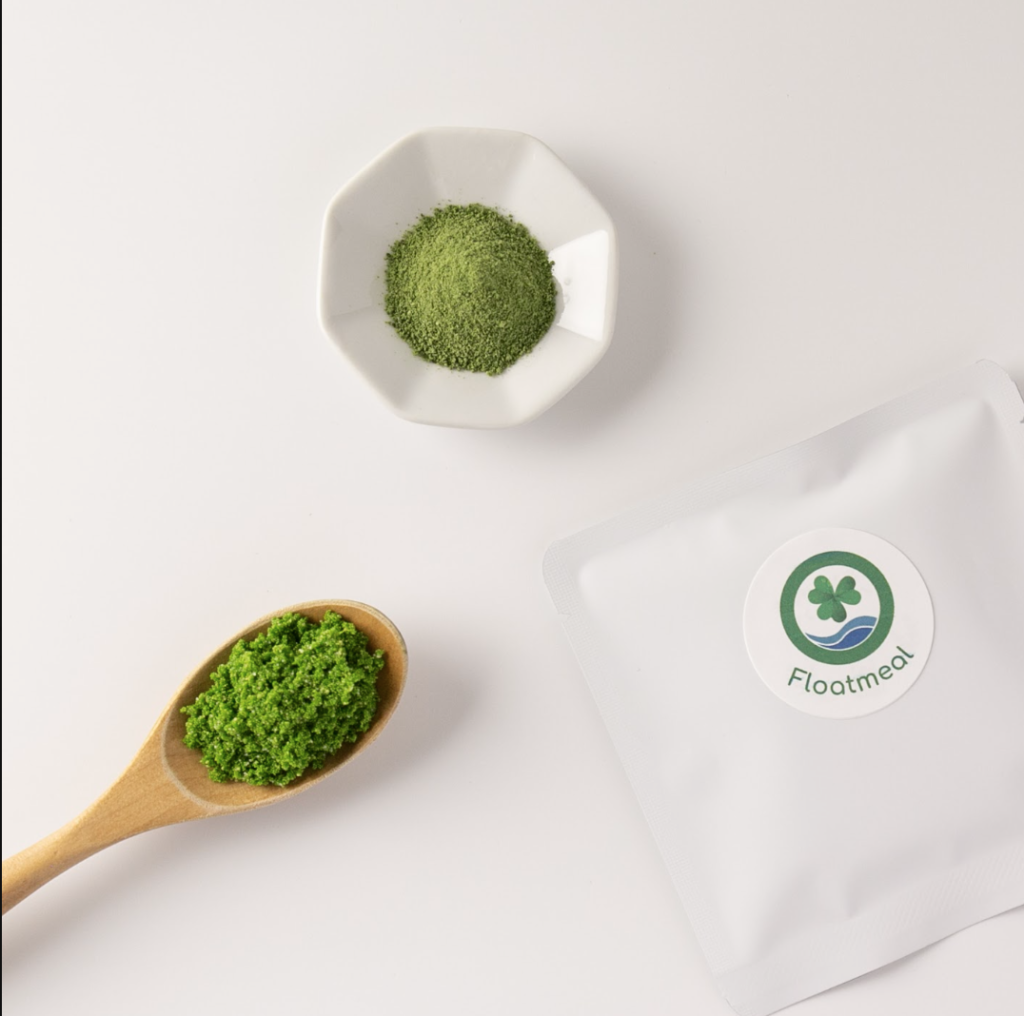
"Powdered Wolffia," a powdered duckweed with a matcha-like flavor
Kawana:In the past, there was a time when people placed value on buying cars or wearing nice clothes to satisfy their need for recognition. Nowadays, it seems there may be more people who find value in contributing to society.
Kitamura:The guiding principle behind everything I do is whether or not it makes me happy. Whether it’s spending time laughing with friends or studying late into the night to prepare for the future, both bring me happiness. However, if I focus only on the present, my life becomes unbalanced, so I also make sure to value the time I spend working hard for my future. The people who support Floatmeal are all those who wish for others’ happiness. While my own happiness is still my main priority, I aim to be able to work for the happiness of others in the near future.
Kawana:Floatmeal’s vision is “Sustainable Nutrition for Everyone,” and it’s wonderful to see that as the company moves toward this goal, more people are finding happiness.
Kitamura:I hope that the people who are involved with us right now will use the “Floatmeal” ship as a means to achieve self-fulfillment in their own lives. It’s perfectly fine for Floatmeal to be a stepping stone on someone’s path to self-actualization. I, too, am not Floatmeal itself, but simply one person creating happiness through it. The company will evolve alongside my growth, but it is not exactly the same as me. The ideal is for us to grow together as separate entities.
Kawana:I can really relate to this because the name “Libanes” also incorporates the meaning of “Leave a Nest”—the idea of spreading one’s wings. Perhaps it’s precisely because Mr. Kitamura embraces this way of thinking that so many people are drawn to Floatmeal and are able to work together there.
The Strength of the Second Penguin, Who Doesn't Want to Fail
Kawana:Once Mr. Kitamura decides to do something, he really focuses and takes action, doesn’t he? Even when he joined Floatmeal, he set a clear goal: “I’ll be fully committed for the two months of spring break.”
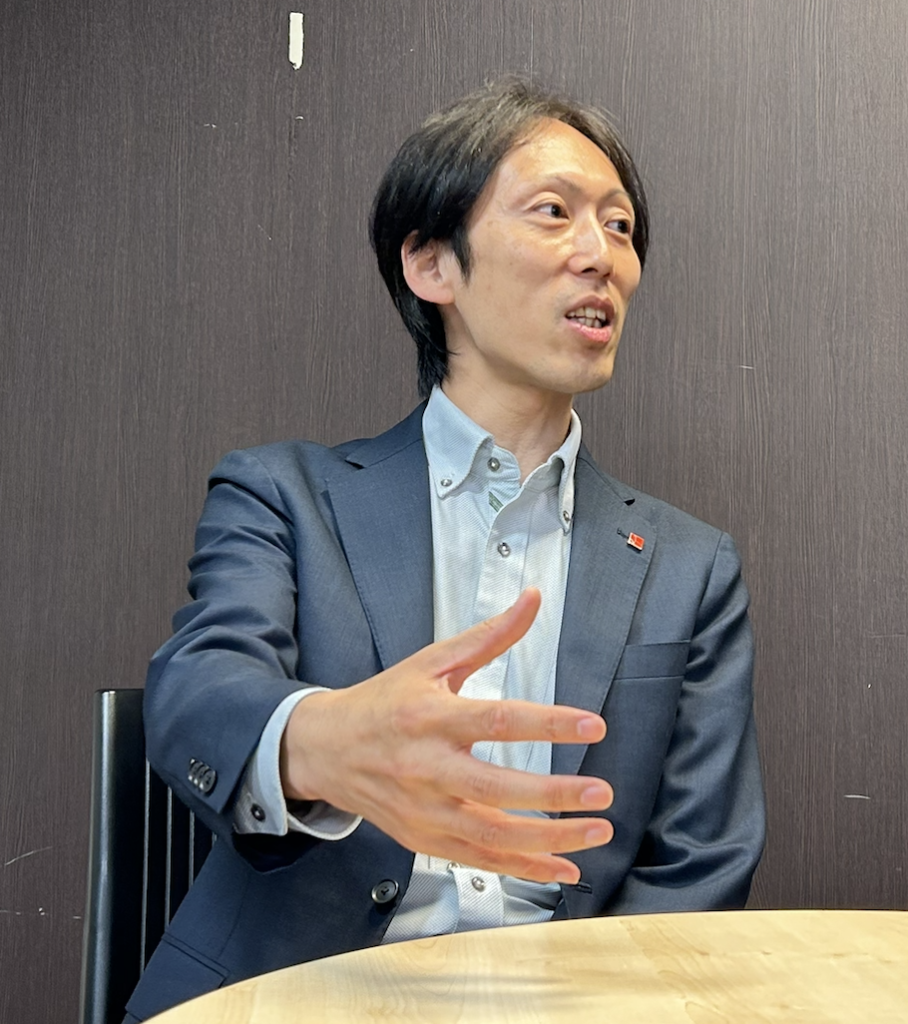
Kitamura:The truth is, it's because I'm a scaredy-cat.
Kawana:Rather than coming across as cautious or timid, at the Hokkaido Forum of the Interdisciplinary Society, I had the opportunity to have him speak at a session, and he immediately joined the projects I introduced—so I saw him as someone with a strong drive and a knack for getting things done.
Kitamura:I do have a lot of drive, but because I’m a bit of a scaredy-cat, I’m the type who decides on my next move and then takes the plunge with a “Okay, let’s do this.” Rather than aiming for success, I work hard because I “don’t want to fail.” Since I’m afraid of failure, I listen to others’ opinions and mimic the methods of people who are doing well. It’s a style where I’m more inclined to openly adopt ideas I think are good rather than coming up with something new.
Kawana:I get the impression that Mr. Kitamura is surrounded by many working professionals who support him, and perhaps his willingness to listen to their ideas and incorporate them is one of the keys to getting them on board.
Kitamura:Maybe my life has turned out the way it has because I’ve spent my time collecting things that people tell me they “like.” It’s faster to learn from others and act on that than to figure things out on my own. But I’ve decided I won’t have any regrets. No matter the outcome, I don’t want to deny the path I’ve chosen. I want to live my life trusting the person I used to be.
Kawana:By taking others’ perspectives into account, it’s important to take personal responsibility for your decisions—even when things go wrong—rather than blaming others, right? Does your co-founder, Sajad, share a similar way of thinking?
Kitamura:He’s a true visionary who can clearly articulate what he wants to do. Since I joined later, I’m more of a “second penguin.” I’m not the type to jump in right away; I prefer to calmly assess the situation before taking the plunge. Sajjad is always brimming with ideas. I use the advice I gather from those around me to make decisions and then execute them while involving external partners in the process. We always discuss and decide on Floatmeal’s policies together with Sajjad.
Kawana:There's a good balance between the CEO and the CTO, isn't there?
Kitamura:I think so. For example, when it comes to hiring, I’m the type who likes people and tends to act on my emotions. If I think someone seems like a good fit, I’ll approach them right away, but Sajjad is a logical thinker, so he calmly assesses the person’s skills. He sets the direction, and within that framework, I decide, “We definitely want to hire this person.” That’s why I rely on him. I’m the “Second Penguin”—someone who listens to everyone’s opinions and selects the best course of action. My role is to move the Floatmeal team forward while involving those around me.
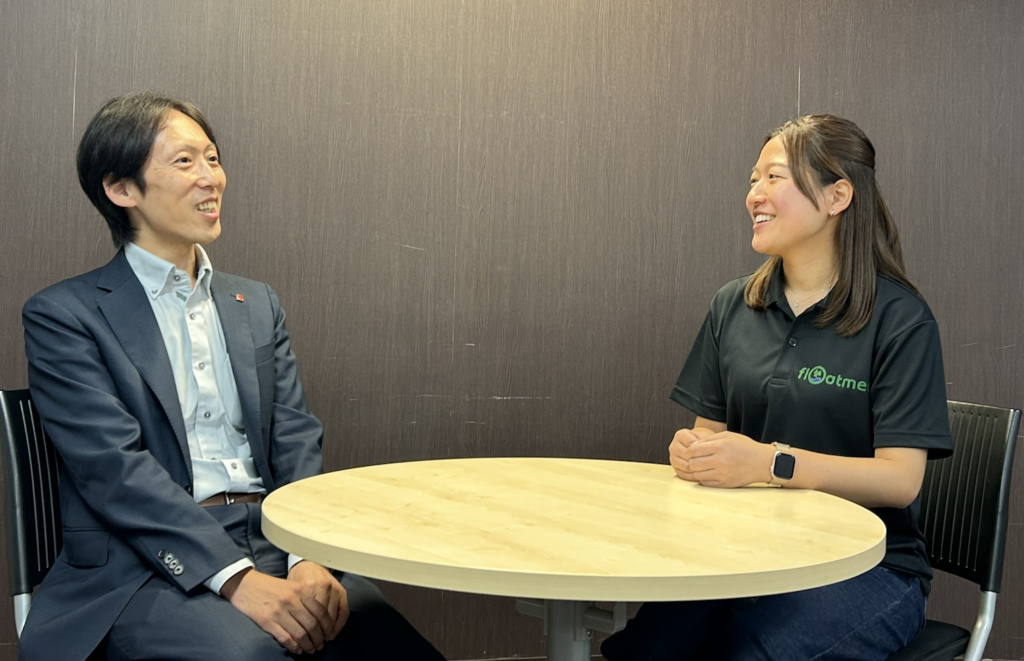
Kawana:You’re truly a leader who brings everyone’s happiness to life.
Creating a New Industry Through the Power of Duckweed and Microorganisms
Kawana:I heard that you’re expanding your operations beyond Hokkaido. How do you plan to develop your business going forward?
Kitamura:Starting next month, we will establish a new research and development center in Toyohashi, and Sajad will take the lead in setting up the organization. I will be traveling back and forth between Hokkaido, Tokyo, and Thailand to fully advance the commercialization of this project in Thailand. Thailand has a long-standing cultural tradition of eating duckweed, and the local people are eager to preserve that tradition. Together with them, I want to build an industry that balances cultural preservation with economic growth.
Kawana:So you're moving on to the next stage, huh?
Kitamura:Yes, actually, we’ve just changed our company’s mission to “Harnessing the power of nature to build new industries.”
Kawana:Based on what I've heard about the current business, I didn't have any issues with the previous one, so why did you change it now?
Kitamura:Our core technology is a cultivation method that utilizes microorganisms—first discovered by the Morikawa Laboratory at the Graduate School of Environmental Science, Hokkaido University, where Sajjad conducted his research—that promote the growth of duckweed. This technology can also be applied to plants other than duckweed. It can also be used to enhance the growth and nutritional value of plants such as strawberries and tomatoes. We are eager to take on challenges in any field that contributes to solving environmental issues.
Kawana:It seems like this could be useful for urban greening and land reclamation, too. I’ve come up with so many ideas for things I’d like to work on together, including collaborations with the food industry and expanding overseas.
Kitamura:That’s right. Sajad and I often talk about the concept of the “circular economy.” In the future, I think we might be able to use duckweed and microorganisms to build a circular society, perhaps by incorporating wastewater treatment and other measures. Our ultimate goal is to have the greatest possible impact on reducing greenhouse gas emissions. To that end, we’ll continue to take on new challenges.
(Written by Miyuki Shigenaga)
 English
 Japanese