

- Interview with Adventure Talent
- News
Through meaningful interactions, let’s become partners in changing the world
This article is a re-edited version for online publication, based on an interview originally featured in the March 2024 issue of the Talent Support Booklet, Vol. 23, titled “Becoming Partners Who Change the World Through Sincere Interactions.”
Speaker
Ms. Ruka Suzuki
Graduated in 2021 as a member of the first cohort of the Global Studies Program at Sakata Minami Private High School. In 2022, she enrolled in the Faculty of Entrepreneurship at Musashino University as a member of the second cohort. While interning at Unilever Japan and the certified NPO Peace Wanko Japan, she also serves as co-representative of the student organization “Workshop-ya” and as representative of Otetote, a service that supports people preparing to welcome a dog into their homes.
Mr. Ryoichi Yabuki
Graduated from Shibuya Gakuen Makuhari High School in 2015. Enrolled at the University of Tokyo in 2016; completed the master’s program at the Graduate School of Pharmaceutical Sciences in 2022; currently in the second year of the doctoral program there. In 2023, she completed the University of Tokyo Science and Technology Interpreter Training Program (16th cohort). Alongside her research in cell biology, her area of specialization, she pursues independent research projects. Her dream is to do work that leaves a lasting impression on people 60 years her junior.
Interviewer
Kiyoshi Inoue
President and CEO, CCO, Ribanes Co., Ltd.
Ph.D. in Pharmacy; licensed pharmacist. Founded Ribane in 2002 while enrolled in graduate school. After completing his doctoral program, he served as an Assistant Professor and Lecturer at the Faculty of Science, Kitasato University; an Assistant Professor at the Graduate School of Medicine, Kyoto University; and a Specially Appointed Associate Professor at Keio University. In 2018, he assumed concurrent positions as Professor of Advanced Pharmacy at the Faculty of Pharmacy, Kumamoto University, and Visiting Professor at the Faculty of Pharmacy, Keio University. He is a researcher and entrepreneur who, while conducting research and development, is involved in launching joint research projects with universities and research institutions, as well as supporting the establishment of research institutes. He has also been involved in launching numerous startups and serves as an advisor to them.
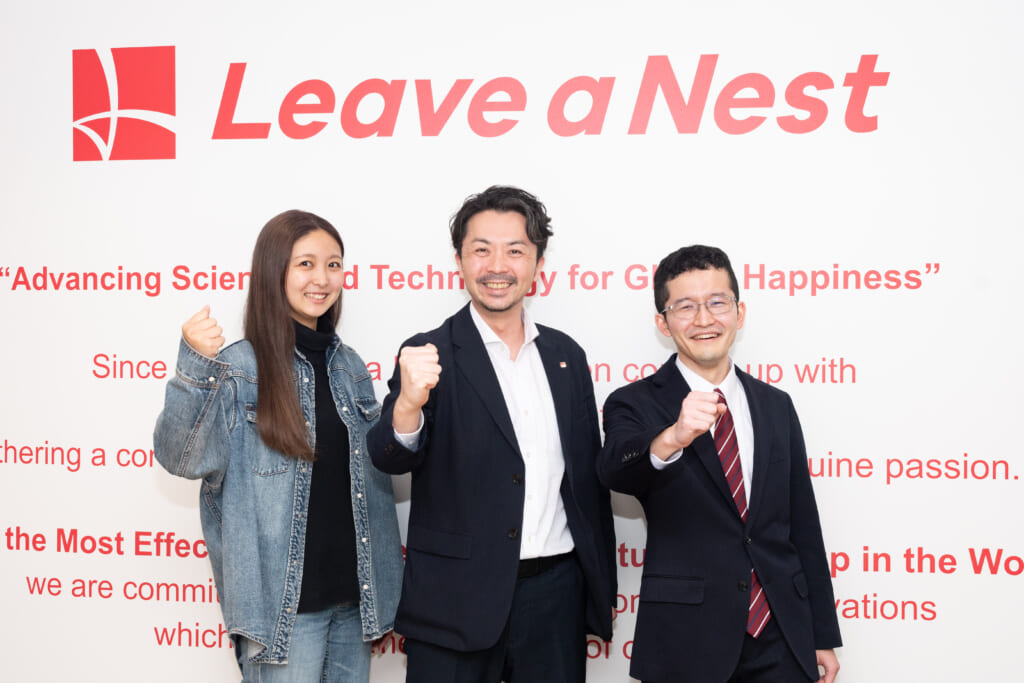
The Ribane Scholarship provides 100,000 yen to students who are struggling with thoughts like, “I want to change the world, but I don’t know where to start,” or who have ambitions such as, “This is what I want to do!” and supports their individual initiatives through a seminar-style program. In the first round of 2023, a total of 37 students were selected to participate at Ribane’s Tokyo and Osaka headquarters. What are today’s students thinking, and what challenges are they taking on to change the world? And what should those supporting the students do, and what mindset should they adopt? Mr. Yabuki and Mr. Suzuki, who participated as scholarship recipients in the first cohort’s “Tokyo Inoue Seminar,” and Kiyoshi Inoue, who served as the seminar leader, share their insights.
People with a passion for,
A place where people who want to do something come together
Inoue: It’s been since the seminar we held at Lifeness from April to June 2023 that I’ve met the two of you here! Yabuki-kun began his Livanes Scholarship project with the theme “Supporting Elementary and Middle School Students’ Summer Vacation Independent Research Projects,” while Suzuki-san focused on “Creating Many Learning Spaces to Address the Disparity in Growth Opportunities Between Rural and Urban Areas!” Why did you decide to apply for the scholarship in the first place?
Yabuki: It all started when an acquaintance told me about it after they happened to come across it online. At the time, I had just finished creating YouTube videos to support elementary and middle school students with their independent research projects and had also held a workshop for elementary school students. I was thinking about doing something else when I heard about the Ribanes Scholarship, and after seeing that it said I could do what I wanted with 100,000 yen, I decided to apply.
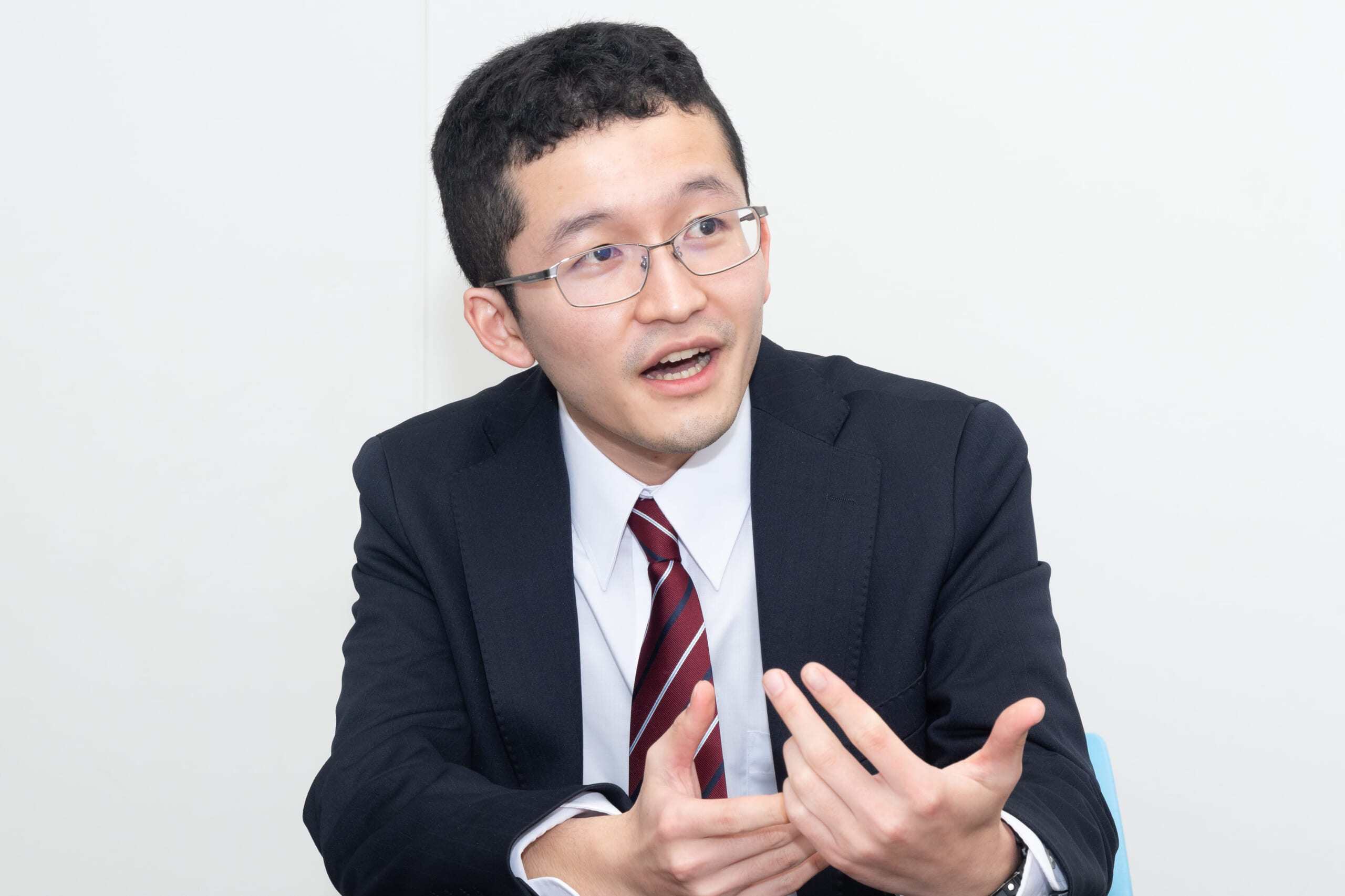
Yabuki: Back in middle and high school, I was a member of the chemistry club and conducted research. I also put on experiment shows at the school festival, where I worked to communicate science through hands-on experiments. However, it always stayed with me that I struggled to get my science messages across to the elementary and middle school students and their parents, which is what sparked my interest in science communication. I’m currently conducting research in graduate school, but I want to value my connections with people outside the research community. In fact, through my work as a research coach at Ribane, I’ve also served as a poster judge for Science Castle. When I heard about this scholarship opportunity, I thought there was no reason not to apply, so I decided to do so.
Inoue: I was already familiar with Ribane, and the timing was perfect! What about you, Suzuki?
Suzuki: When I was a freshman in high school, I participated in a program in Tokyo focused on entrepreneurship and business. Most of the participants were from Tokyo or Osaka, and I was the only one from the Tohoku region. Even though we were all the same age, I found it hard to accept that simply living in a rural area meant such a disparity in opportunities to think about social issues. That’s what first inspired me to wonder if we could create similar programs for middle and high school students in rural areas as well.
Inoue: So you felt a sense of responsibility as someone from a rural area. I’m sure there are others who feel the same way, but most people just move to Tokyo, don’t they? What made you decide that you had to make a difference in your hometown?
Suzuki: Back then, I was discussing similar concerns with a high school classmate. When I was a sophomore, my friend and I planned a program like that in our hometown and ran it for underclassmen—it was actually quite well-received. After entering college, I founded a student organization and was planning to hold a five-day workshop in my hometown of Sakata City over the summer. However, at that point, we had no idea where to hold it or how to recruit participants, and just as our team was discussing our lack of funds, we happened to receive this scholarship announcement. I thought that if we used this funding, we might be able to hold a larger-scale event than we had originally planned, so I applied.
Inoue: What was it like when you actually applied?
Suzuki: When I attended the information session for applicants, I met graduate students and people involved in activities completely different from my own, and I thought to myself that being able to interact with people like this would be a once-in-a-lifetime opportunity for me. I felt that interacting with such a diverse group of people here would definitely be helpful when I enter the workforce, and that it would greatly expand my network, so I knew I just had to get accepted.
Inoue: This is a place where many people gather—people who, at first glance, might seem a bit unconventional, but who speak passionately about their activities and ideas. At Lifeness, we launched this scholarship based on the hypothesis that “there must be a lot of students out there who want to do something.” Of course, focusing on research is important, but we thought that having an opportunity to take that first step when you have something you want to do on your own would give everyone the courage to move forward. When we founded Ribane 21 years ago, someone who had helped us back then said, “I don’t really understand what you’re doing, but you’re trying to do something interesting. I want to support that,” and gave us 100,000 yen. Knowing that there was someone out there supporting our efforts gave us tremendous courage. And it was with that 100,000 yen that we made up our minds to seriously launch an initiative that would change the world. The message we’ve embedded in this 100,000-yen scholarship is that we want everyone to use this soul-filled sum to create their next project. The fact that the two of you applied just as the first cohort was being formed feels like fate to me.
"Changing the World" is
Turns into a real-world figure
Inoue: When I first met you, Yabuki-kun, you had the aura of a doctoral student, and I sensed a certain inner strength about you. I knew that Suzuki-san was an EMC* student and had always been a proactive person. I think the two of you are quite different in terms of your student statuses, but has anything changed for you since joining the seminar as scholarship recipients?
Yabuki: I feel like I’ve changed over the past year. To be honest, before I applied for the scholarship, I wasn’t interested in entrepreneurship at all. I’d done a little work on an independent research project in elementary school, so I started participating in the seminar thinking, “I’d like to do something for my independent research project.” But by the time the seminar ended, I found myself taking action toward what I really wanted to do without even realizing it.
Inoue: Really? I'm curious to know what insights you gained and what actions you took.
Yabuki: In our seminar, Mr. Kiyoshi often told us, “Just put it out there, even if it’s only 60 percent complete.” In my case, it was precisely because I shared my half-baked idea—that I “wanted to do something related to independent research”—that I was able to find fellow scholarship recipients like Suzuki, who was working with me in the seminar, and Endo, who loves earthworms and is researching them. The three of us planned a workshop for elementary school students, and as we worked to spread the word about earthworm-themed independent research projects, I gradually began to see what I really wanted to do. As a result of that, I came up with the catchphrase “I’m doing independent research on independent research” to use when introducing myself. After that, wanting to try hosting an event related to independent research, I even entered a startup contest. I didn’t win, though.
Inoue: So a change was taking place inside you, Yabuki! The old you would never have imagined applying for a contest like that.
Yabuki: I couldn't do it.
Inoue: What about you, Mr. Suzuki?
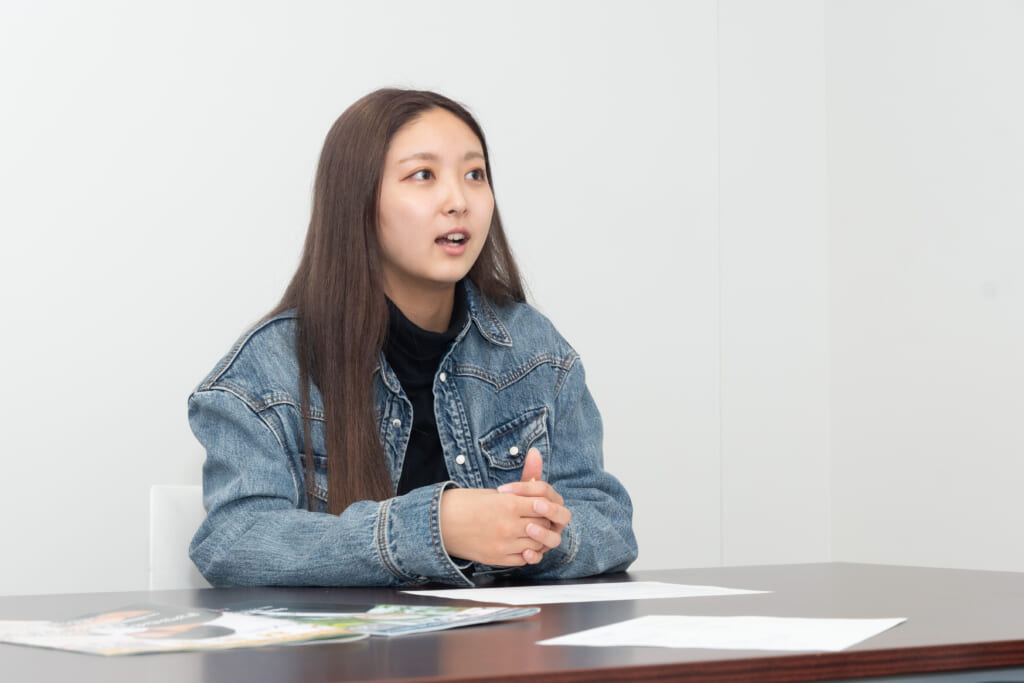
Suzuki: I’d heard many times in college classes about “changing the world,” but this was the first time I truly felt that I could actually change the world. At first, I had things I wanted to do, but I wondered, “What kind of future would that create if I changed the world?” The moment I really grasped what “changing the world” meant was when I was giving a presentation in my seminar. I was simply frustrated by the gap in life experience between urban and rural areas—a gap I felt acutely precisely because I’m from a rural area—and I was working to prevent more middle and high school students from feeling that way. But when Kiyoshi asked me in the seminar, “How are you going to change the world? What’s new about this?” I realized that the activities I’d been doing would, first and foremost, change my hometown of Sakata. And it clicked for me—I felt that from there, I could change Japan and eventually the world.
Inoue: I used to talk about “changing the world” in college, too, so I’m really happy that I’ve come to truly understand what that means through my own experiences. I’m sure we discussed a lot of things in our seminar—are there any stories or words that really stuck with you?
Suzuki: The story of Momotaro really left an impression on me.
Inoue: Momotaro? Did we even talk about that? (laughs)
Suzuki: In the story of Momotaro, he starts out with nothing but millet dumplings, but a monkey, a pheasant, and a dog join him, and he succeeds in defeating the ogre. So I was saying that maybe you don’t need to have everything ready from the very beginning. When I applied this to my own situation, I realized that the millet dumplings represent my ideas and aspirations, along with the 100,000 yen I received—and I felt that I’m not all that different from Momotaro. At first, I used to think that before starting anything, I had to set aside money, prepare this and that… and only then, after mapping out a clear plan in my mind, could I build a following and take action. But my perspective has changed—I now realize that’s not the case.
Inoue: At Ribboness, we often say, “Pick up your weapons as you run.” This reflects the idea that nothing will happen unless you take action, so you should just give it a try. You won’t get anywhere if you just keep thinking about your business model. We’re activists, and we want people to take risks and just get moving—even if it means failing. That’s what the 100,000 yen grant is for, so I’m really happy that the message, “Just go for it!” resonated with people.
100,000 yen is
What kind of value will it become?
Inoue: For us, that 100,000 yen had special meaning—but what exactly did you use it for?
Suzuki: Earlier, you mentioned the idea of “backing” us. I, too, only realized for the first time—after receiving this 100,000 yen—that there are people out there who support our student activities. We used that 100,000 yen to cover meal expenses during the workshop and our travel costs, and we were able to successfully carry out the event over five days. At the end, when we gave a presentation to the local residents who had supported us, we were even told that even after the program ended, we could set up an event booth at a local festival to bring the junior high and high school students’ ideas to life. I truly realized just how many adults are out there supporting our student activities—efforts aimed at providing opportunities for junior high and high school students. I feel that the initial 100,000 yen has been a catalyst for bringing about significant changes in Sakata.
Inoue: That's exciting! Do you think you'll be able to keep up these activities going forward?
Suzuki: We’re currently preparing for our second event, which will take place in March, and a government official I met previously is helping us out by serving as a commentator for the presentations given by the middle and high school students participating in the event. Furthermore, rather than just the student group figuring out how to make this initiative sustainable on our own, we’ve now been able to consult with people from the private sector and government officials as well. Some people are helping us devise ways to make this work by leveraging the city’s initiatives and budget, and the number of people willing to cooperate with us in Sakata has increased dramatically.
Inoue: Getting people involved as we go—that’s a great idea! Do you think we’ll be able to get some cooperation from companies?
Suzuki: That's right. There are companies that place a high priority on their relationships with the local community, and I feel like we could get them on board right now.
Yabuki: In my case, I started this project with just a vague desire to do something related to independent research, so I hadn’t given any thought to money. There aren’t many answers along the lines of “I spent money on this.” If I had to name one thing, it would be when I went looking for independent research projects on earthworms with Endo, a scholarship student who was researching them, because I wanted to find some examples. When I couldn’t find much information online, I remembered that the contests I’d entered during middle and high school had their entries on public display, so I thought I might be able to see some independent research projects there. I contacted several prefectures and visited the three—Chiba, Kanagawa, and Ibaraki—that were holding public exhibitions. There, I saw several hundred independent research projects on display in each region. I used my scholarship money to cover the travel expenses to get there. Kiyoshi-san’s words, “Invest in yourself,” really stuck with me—maybe this is what he meant by investing in myself.
Inoue: Spending money on yourself to take action and nurture your passion—that’s an important mindset. So, how did it go when you actually went to the public event?
Yabuki: I felt both moved and disheartened. I was moved to see that there are so many elementary, middle, and high school students who explore various topics simply out of scientific curiosity. What I actually found most impressive was an independent research project in which a student had observed plants for eight years and displayed a box full of notebooks containing their records. I’m currently in my second year of doctoral studies, which marks my fifth year of research. I thought I’d been doing cell biology research for five years, but seeing people my age—and even younger—who’ve been at it for longer made me realize, “I still have a long way to go.” No matter which public event I attended, there were always several elementary, middle, and high school students with that kind of scientific curiosity, and I was truly impressed.
Inoue: I see. So you realized, “Oh no, I’ve only been doing research for five years.” On the flip side, what was the most discouraging thing?
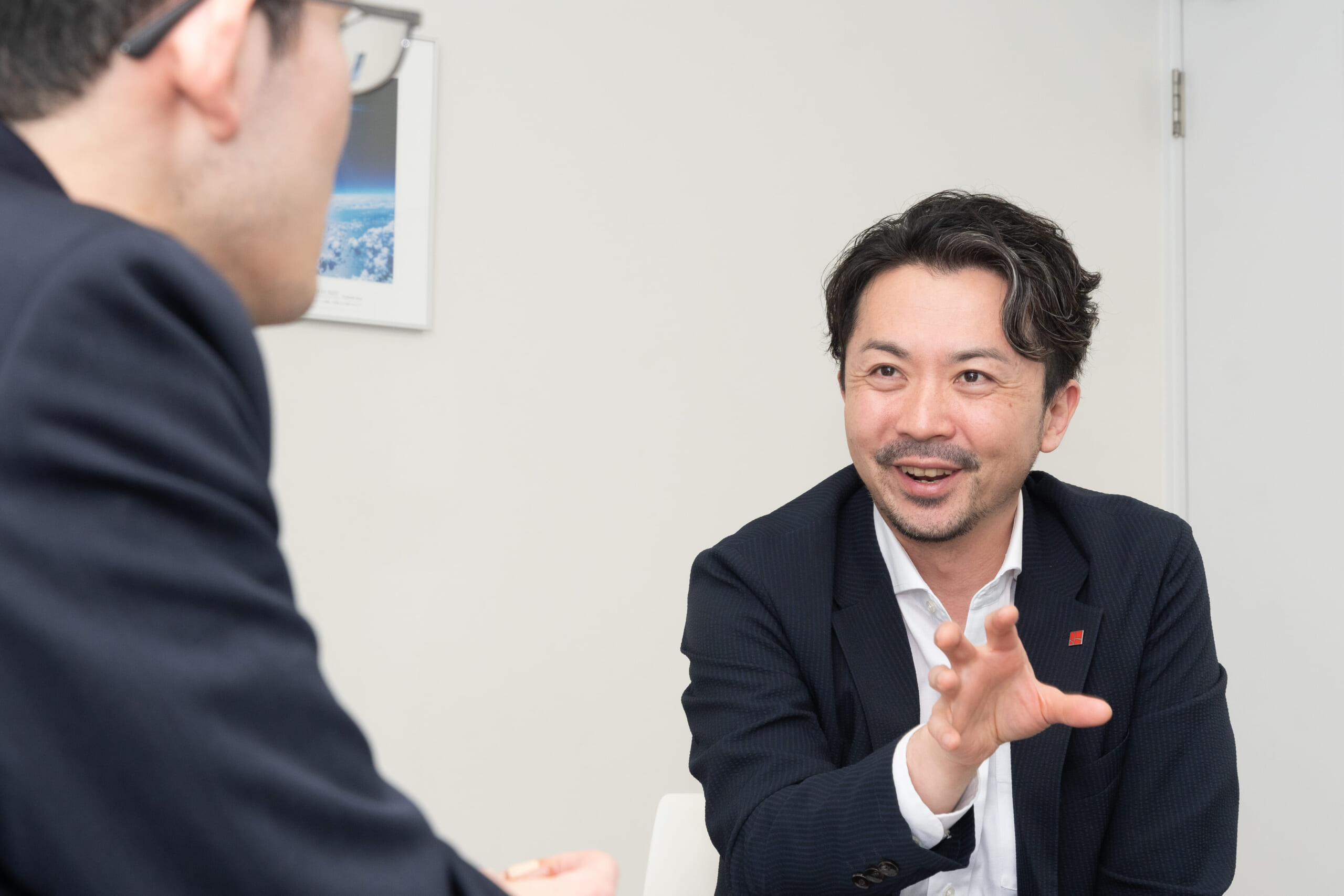
Yabuki: What discouraged me was wondering whether I truly have the scientific curiosity necessary to conduct research in graduate school. I found myself thinking, “Am I doing this research just to get my degree? Or am I doing it just for the lab?” That made me realize I need to get serious about my research once again. While I’ve been pursuing my own projects this academic year, next year I’ll focus on my research to earn my Ph.D. and work hard to gain confidence in myself as a researcher.
Inoue: Even the professors who come to Science Castle to hear junior and senior high school students’ research presentations say the same thing. They used to be completely consumed by writing grant proposals to secure research funding, but after seeing the students’ genuine research presentations, they say, “This is it—this is the essence of science!” and head back to their labs with smiles on their faces (laughs).
矢吹:アカデミアじゃないけど、そういう見えないところの研究成果がたくさんあるということを知りました。だから、もっとすくい上げられるんじゃないかと。自由研究みたいな研究を、もっと応援するような仕組みがあったらいいよなって、本当に思ったんです。自分はどう生きるべきかというのを考えた際に、そういう自由研究を応援する仕組みづくりをやりたいって思ったんですよね。自由なサイエンスを発掘して、それがちゃんと認知されるような世界を作っていきたい。そうしたら、アカデミアの基礎研究を含めて、自由な研究を真剣に応援するような世の中の風潮になると思うんです。
井上:自分に投資して外に出て、動いたからこそ見えてきた世界ですね。ぜひ今後一緒にやりましょう!でもまずは研究して博士号をとるということだったので、研究者の仲間として絶対に達成してください。
個のネットワークを持つ人が
仲間になると
大きなことができる
井上:ゼミ長としてゼミを実施するときに考えていたことは少しずつ話してきたんですが、参加する側の二人の立場ではどんな心構えで臨んでいたんですか?
矢吹:ゼミでは、うまくいったこと・いかなかったことはもちろん、自分の正直な気持ちとかも含めて何を言っても大丈夫という心理的安全性がありました。ゼミ長の浄さんが包み隠さず厳しいコメントをくれたのも、本気で自分の活動が世界を変えることを思ってのことだというのが伝わってきました。
鈴木:私は厳しいコメントをもらうためにゼミに来ていました。浄さんは私を生徒というよりは対等な1人の人間として見てくれていた気がして。私が行っている活動は、他ではすごいと褒められることが多かったのですが、自分一人では満足して活動の進展が止まってしまいかねないところを、ゼミでは厳しい意見をもらってネクストステップに行く道筋を示してくれました。
井上:僕自身も、みんなとともに世界を変える仲間になりたいと思っていたからですね。ゼミの最初には、「本気でぶつかってきてください。こっちも本気で応えます」って言ってましたよね。
矢吹:さらに、自分以外の奨学生も、自分なりの動画※を提出し審査を経て、ここに集まった人だからよっぽど変わり者で本気なんだなと思っていました。ある意味自分と同じで信頼できて、何を話しても大丈夫という感覚でした。これが書類審査のみで選ばれている人だったらまた感覚は違うと思いますし、鈴木さんたちともこれがなかったらそもそも出会ってないと思います。
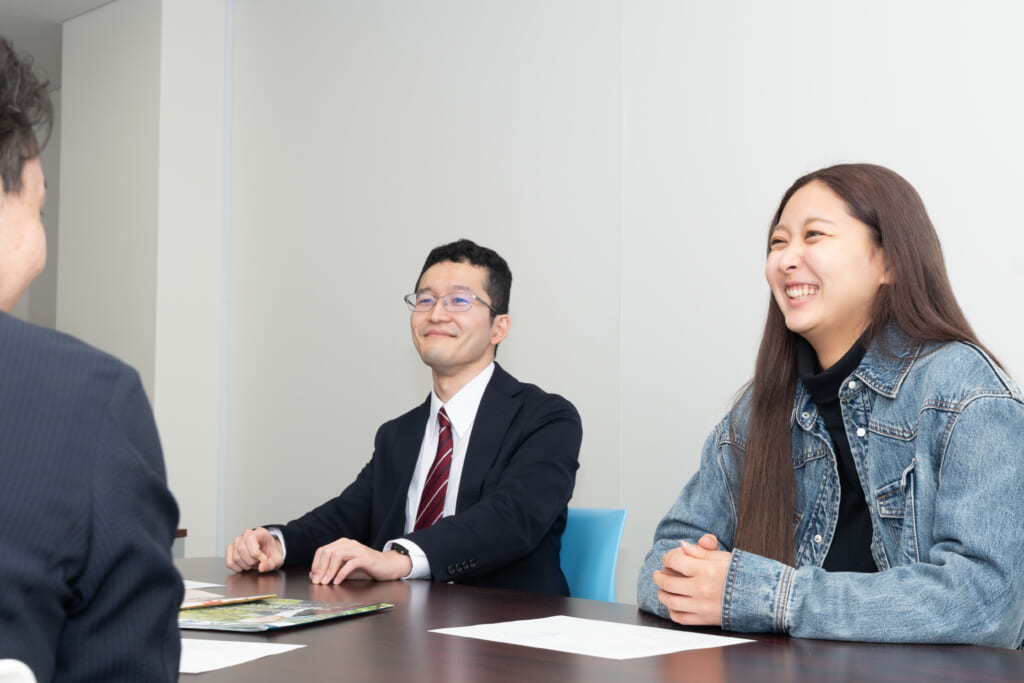
井上:教える訳ではなく、仲間という意識があるからですね。「なぜリバネスでは面白いことが次々できるのか?」とよく聞かれますが、メンバーの一人ひとりが独自の面白い人の繋がり「個のネットワーク」を持っていて、それぞれのネットワークを合わせると1+1以上に広がって相乗的に大きな面白いことができるようになるんです。ここに来ている奨学生メンバーも、みんながそういう仲間だなと。ずっと長く一緒にいる訳ではないですが、濃いやりとりを瞬発的に多く重ねて強い関係性を築く。ふと何か面白いことを思いついたときに、お互いにすぐ連絡出来て、あっという間に共鳴して動ける。リバネス奨学金はそういう貴重な仲間が作れる場所ですね。もしさ、この先僕から「面白いプロジェクトを仕掛けるから集合!」って連絡来たらどうする?
矢吹・鈴木:絶対行きます!
井上:嬉しい!この先も、ぜひ一緒に面白いことを仕掛けていきましょう!
(構成・吉川 綾乃)
 English
  Japanese