

- Interview with Adventure Talent
- News
I’ll do it all—research and management! I’ll do it all—research and management! Breaking free from the mold of a model student, I’ll tackle serious challenges alongside my mentor.
This article is a re-edited version for online publication, based on an interview originally featured in the December 2024 issue of the “Talent Support” booklet, Vol. 26, titled “Becoming Partners Who Change the World Through Sincere Interactions.”
Speaker
Mr. Shin Sasaki
SPHinX, Inc. COO
University of Tsukuba Graduate School
Born in Fukushima Prefecture in 1997. Currently 27 years old. Since 2022, he has been enrolled in the doctoral program at the University of Tsukuba. Inspired by his experience of the Great East Japan Earthquake while in middle school, he has been developing medical devices and technologies at the graduate level that can be used even in environments lacking infrastructure, such as disaster-stricken areas and developing countries. In August 2024, he co-founded SPHinX, Inc. with his academic advisors and assumed the role of Representative Director and COO. His areas of expertise include polymer materials and biomaterials science. His hobbies include saunas and tennis.
Interviewer
Shuichiro Takahashi
President and CEO, COO, Ribanes Co., Ltd.
He completed the Ph.D. program at the Graduate School of Frontier Sciences, The University of Tokyo, and holds a Ph.D. in Life Sciences. He is a founding member of Ribboness. He established Ribboness’s research institute and built the foundation for the company’s research support and R&D operations. To date, he has devised unique business models, such as the “Lifene Research Grant” and “L-RAD,” a platform for underutilized research ideas, and has led numerous initiatives involving industry, academia, and the education sector. He has served as President and COO since 2010. Since 2022, he has concurrently served as Representative Director of Lifene Capital, Inc.
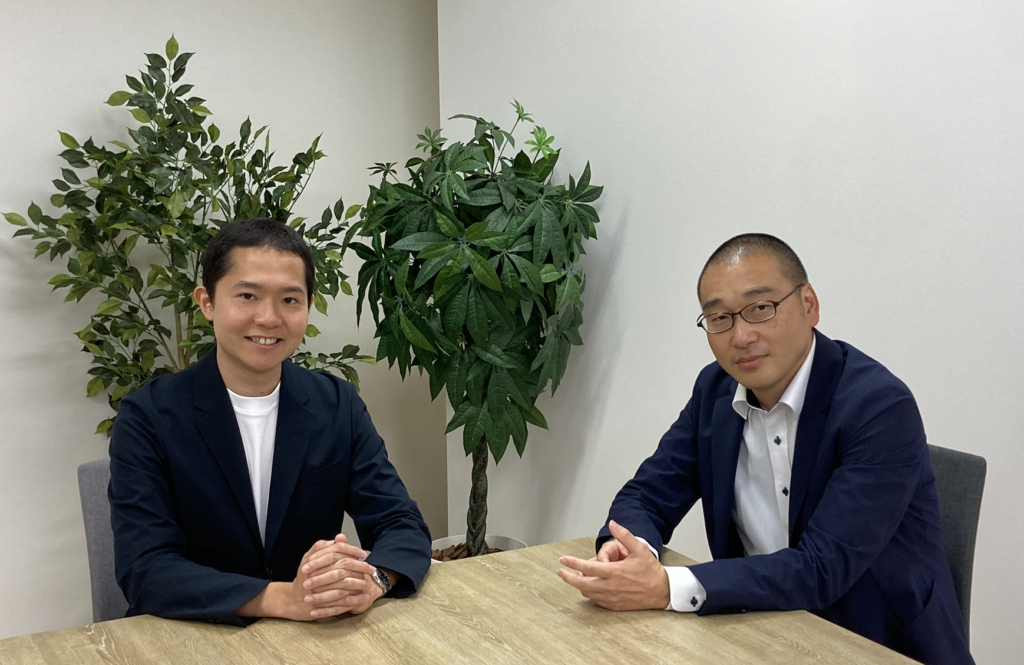
Shin Sasaki developed a rapid diagnostic kit for infectious diseases and founded a company while still a doctoral student. He was driven by his advisor’s passion and his own desire to use technology to help solve challenges in the medical field. Sasaki’s company, which started with three researchers, has already taken a major step forward, including the launch of a pilot study in Africa. What path has Sasaki taken so far, and what kind of future is he aiming for?
Tackling Global Infectious Disease Challenges
Doctoral Student
Takahashi: Mr. Sasaki, you founded SPHinX, Inc. (pronounced “Sphinx”) this past August, didn’t you? I’d love to hear more about your business.
Sasaki: We aim to develop a simple diagnostic kit for infectious diseases using temperature-responsive smart polymers and to market and distribute it in developing countries. While there are many infectious diseases that remain major problems in developing countries, our first target is hepatitis caused by the hepatitis C virus (HCV). This is a disease in which the liver progressively deteriorates, eventually leading to liver cirrhosis or liver cancer. It is estimated that there are as many as 70 million patients worldwide. The WHO has set a goal of reducing the number of new infections and deaths by 2030, but it is said that achieving this goal will be difficult if current trends continue.
Takahashi: About 20 years ago, hepatitis C caused by unpasteurized blood products was also a problem in Japan, but now that treatments and viral testing have become widespread, the situation has improved, hasn’t it? However, it’s still a challenge in developing countries.
Sasaki: Yes. Actually, treatments are already available, but the problem is that effective testing methods haven’t become widespread. While PCR testing is common now, it hasn’t caught on in developing countries because it’s very expensive and requires specialized staff. Therefore, if we can develop even a low-cost, simple test kit, we’ll be able to get treatments to patients quickly and save the lives of many HCV patients.
Takahashi: So the technology used in that new test kit comes from Mr. Sasaki’s lab, right?
Sasaki: That’s right. This is where our core technology—smart polymer design—comes into play. Smart polymers are polymeric materials that change their properties in response to various external stimuli. We can design them in various ways to control the type of external stimulus and how the polymer reacts. Using this polymer makes it possible to develop test kits that allow for visual determination of whether someone is infected with HCV. We’re already actively working on this in Africa, bringing the smart polymers we’ve developed to impoverished regions in Egypt and Nigeria to conduct on-site HCV screening tests.
Takahashi: It’s really impressive that you were able to bring your product to Africa so quickly. Was there a specific reason you decided to start your own business?
Sasaki: I’ve always had a curiosity that made me want to try new things. When I was thinking about my future path, starting my own business seemed the most appealing option.
Takahashi: But you can take on new challenges even without starting a business—whether through research at a university or while working for a company. So why did you choose to start a business? Didn’t you have any reservations?
Sasaki: I didn’t really feel any hesitation. Even if I fail, there’s always a next time, and I believe that experience will be useful in my future life. Plus, there’s a lot of momentum behind startups these days. It also helped a lot that my advisor, Professor Ebara, was very open to the idea of entrepreneurship. As a doctoral student, I want to become someone who has a deep understanding of technology while also knowing about business—someone who can do both.
Takahashi: Had you not thought about starting a business before you met Professor Ebara?
Sasaki: I hadn’t really given it much thought. When people talk about startups, I had this strong image of the IT industry, so I thought it was a completely different world that had nothing to do with me. But after meeting Professor Ebara and through Ribane, I learned about the existence of R&D-driven startups. That’s when I realized I could use my own research findings to launch a startup myself.
An environment where one can learn about the outside world,
Expanding Future Options
Takahashi: Do you have any fellow entrepreneurs among your fellow students or friends?
Sasaki: No, there aren't any. To be honest, I think many college and graduate students still don't know much about starting a business. Since they don't know much about it, they don't even consider it as an option. Also, even if they think they do know about it, they might only see the risks.
Takahashi: That’s certainly true. The environment for college students is still quite insular; they rarely have much interaction beyond their peers in the same department or lab. But I actually think it’s important to connect with people from a wider variety of backgrounds. Ideally, it would be great if there were opportunities for students to meet and be inspired by working professionals, researchers in other fields, and all sorts of other people while they’re still in college. But isn’t that pretty difficult to achieve right now?
Sasaki: You're absolutely right. Since I spend most of my time in the lab, I only talk to people my own age. I'd like to learn more about the wider world.
Takahashi: Young people in Japan have overwhelmingly few opportunities to meet entrepreneurs before they enter the workforce, don’t they? Since there are almost no opportunities for such people to come and teach at schools, I think young people can’t really picture what it’s like to “start a business on their own.” There are about 3.5 million companies in Japan. That means one in every 30 people is a business owner—from infants to the elderly. So, in reality, there are actually a huge number of people running their own businesses. But what they’re doing and the mindset behind it isn’t getting across to the younger generation. I’ve long believed that adults who are running their own businesses need to step forward more often in front of students and young people and use their own experiences to convey the reality of what they do. I’m not necessarily telling them to start a business, but I think that simply knowing “there are other ways of working and living out there” can broaden their range of options.
Sasaki: I, too, rarely had the chance to meet people like that.
Takahashi: For example, the partnership between Lifeness and Mr. Sasaki’s SPHinX is one of those interesting cross-border initiatives, isn’t it? They have different resources and different areas of expertise. That’s exactly why it’s so interesting. It’s when people who wouldn’t normally cross paths come together and create something new. I’d like to create many more “spaces” like that.
My teacher's dedication changed my life
Takahashi: By the way, what was your childhood like?
Sasaki: I think he was, indeed, outstanding.
Takahashi: That's great, lol.
Sasaki: Up until middle school, anyway. I grew up in a small town in Fukushima Prefecture. Even though I didn’t study all that much, I was always first or second in my class, so I was convinced I was a genius. Since I always acted modest in front of others, I suppose I came across as a well-rounded child, even with that trait.
Takahashi: I think students like Ms. Sasaki—who have good grades and understand what adults expect of them, so they can anticipate their needs—often have a clear picture of the path that’s expected of them. They may feel afraid of straying from that path, or they may move forward without even knowing that other paths exist. They make life choices based on the expectations of their parents, teachers, and an “imagined” society. As a result, when these students enter the workforce ten years later, people tend to think, “They’re a good person and highly capable, but I don’t really know what they want to do…” As for whether they’re truly leveraging their abilities to take the lead in moving society forward—well, that’s not the case. This is less about ability and more about mindset, and I’ve seen countless examples of this. But Mr. Sasaki, you’re currently running a startup, aren’t you? You’ve strayed from what’s generally considered the ideal path.
Sasaki: That’s right. When I was an undergraduate, I hadn’t given startups a second thought. I hadn’t even considered going on to a Ph.D. program. I vaguely imagined that even if I did go to graduate school, I’d probably stop at a master’s degree, and then I’d join a decent company and lead a life where I earned a decent living.
Takahashi: Why did you decide to quit that?
Sasaki: That would definitely have to be Professor Ebara. Professor Ebara is truly committed to putting technology into practical use, and I was drawn to his passion. From the moment I first met him in an undergraduate class at the university, I felt there was something different about him compared to other professors. I think it’s not just talk—it’s his attitude of actually going out into the field and taking action himself. There are many professors who talk about practical application in academic presentations, but when I actually spoke with them, many had given up, saying, “Well, practical application is pretty much impossible, isn’t it?” Of course, universities are primarily places for basic research, so I’m not criticizing that at all, but I felt that Professor Ebara was different from other professors in that he was genuinely aiming for practical application.
Takahashi: So the professor's dedication is what changed Mr. Sasaki, isn't it?
Sasaki: That’s right. Before I met Professor Ebara, I used to think it was enough to just do what I could within my own limits. But after meeting him, I decided to break out of my shell and take a step forward. Up until then, I’d been content with the status quo, but a desire to aim higher began to take root. He showed me a whole new world—it made me realize, “Oh, so this kind of world exists, too.” That was during my master’s program, and I feel like I changed quite a bit over those two years. It also felt really good to see myself changing.
Takahashi: Professor Ebara is a wonderful person. But people can’t really change just because someone else tells them to, can they? How did Professor Ebara manage to change Mr. Sasaki?
Sasaki: Personally, I feel like I changed without even realizing it… but you’ve been telling your students quite directly, “Do what you can’t do right now,” haven’t you? I think this is the result of me sticking with that. Maybe those words just happened to resonate with me. Or perhaps, deep down, I’ve always had a desire to grow.
I won't rank them in order of priority,
Do it all
Takahashi: What kind of organizational structure does SPHinX currently have?
Sasaki: Currently, our management team consists of three people, all of whom are researchers. It’s me, Professor Ebara, and a senior postdoc in our lab named Nabil, who is from Egypt. He knows more than anyone else about the temperature-responsive polymer technology used in the test kits, and since he has a local network, he’s someone we can really rely on when it comes to promoting the technology. My role within this team is to generate business and serve as the public face of the company, and I think it’s a pretty good combination. That said, to be honest, when it comes to business, there’s still so much I don’t understand.
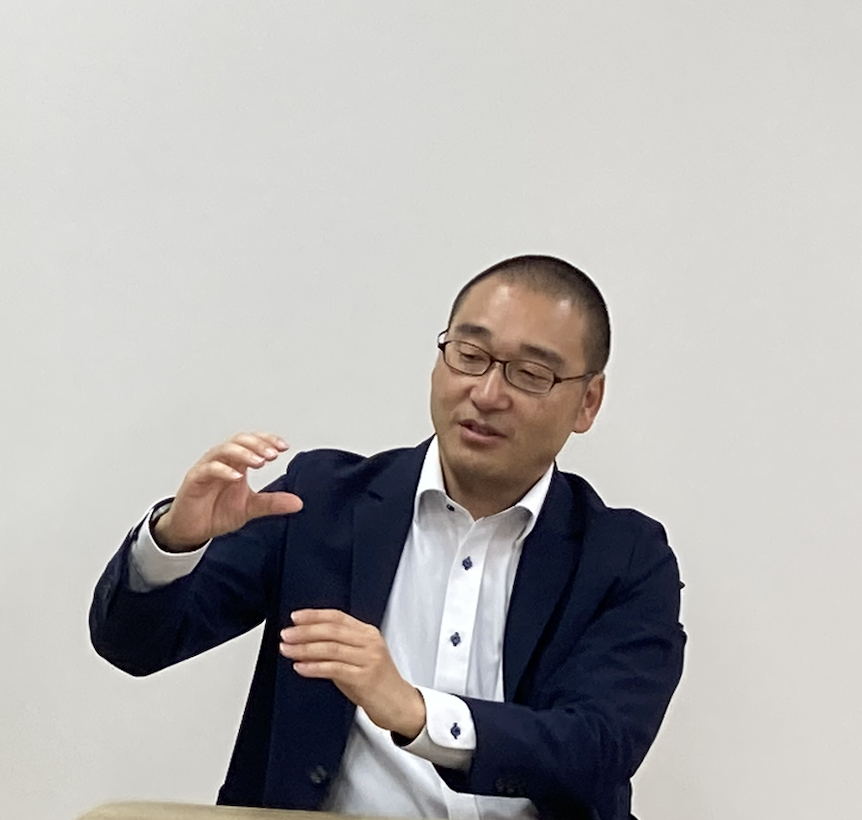
Takahashi: We’ve got a great group of people here, haven’t we? I wonder what things will be like in 10 years.
Sasaki: I think there will definitely be more than three people in 10 years… but I can’t really imagine what it’ll be like.
Takahashi: It’s been 22 years since Ribane was founded, and while our workforce has grown, the driving force behind our success has remained the same since our founding: our vision. Every year, people are drawn to us because they resonate with our vision of “advancing science and technology and contributing to the planet.” What about SPHinX?
Sasaki: I think it comes down to our vision, too. The reason the three of us are running this startup is that we all share the same vision and the conviction that “we absolutely must use this technology to help the people of Africa first”—and because we’re all moving in the same direction. That said, I think it would be fine if people who join SPHinX in the future are the kind who are determined to make money. After all, being able to make money means there’s a real need out there and that our technology is reaching people.
Sasaki: I might actually be pretty bad at setting priorities. I find myself wanting to do everything and experience it all. Of course, part of it is that I’m running this business with a clear vision, and I also have this desire to make it a success and become rich. It’s not a matter of which is more important—I just want to do it all. Maybe it’s because I don’t know enough about the world yet, but that’s how I feel right now.
Takahashi: Ultimately, no one really knows what “everything” means, so we just have to call it “everything.” The more you do, the more you realize how much you don’t know. I might think I’ve gotten a certain amount done, but most of the time, it’s actually just a tiny fraction. It’s just like research. I think it’s a never-ending quest. Let’s keep aiming higher and higher!
Sasaki: That's true! The more I do, the more there is to do next—it's like a "rabbit hole" that I just can't escape. I feel like it's a lot like research. Since we're still in the early stages of our startup, I want to keep taking on new challenges while meeting all kinds of people and drawing inspiration from them.
(Written and Compiled by Tomoko Tachibana)
 English
  Japanese