

- Interview with Adventure Talent
- News
A “researcher” whose work has centered on his interest in the ocean for nearly seven years, dating back to his high school days
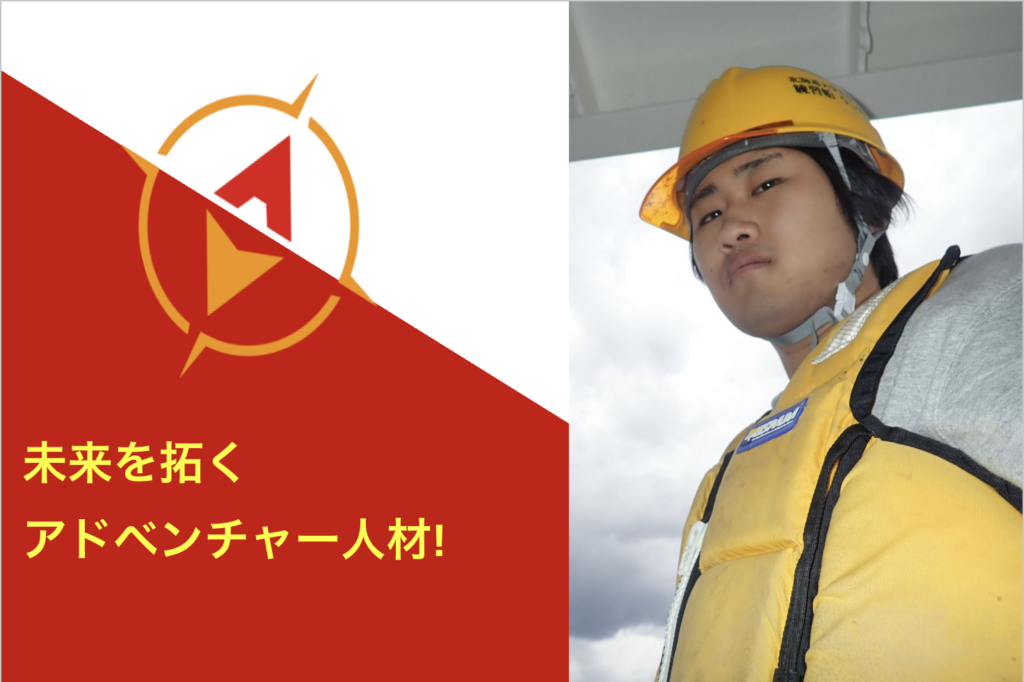
This article is a re-edited version for online publication, based on an interview originally published in Vol. 22 of the “Human Resources Support” booklet, titled “The Turning Point of 2025,” which was released in December 2023.
Speaker
Second-year master's student, Department of Biosphere Sciences, Graduate School of Environmental Sciences, Hokkaido University
Mr. Hirotsugu Sato
“There are still no detailed topographic maps of the seafloor.” “Dozens of new species are discovered in the ocean every year.” Inspired by a conversation with a researcher during high school, he began conducting in-depth research on marine life. He was selected for the “Marine Challenge” research program organized by The Nippon Foundation and won the Excellence Award. He subsequently began researching ocean models in college and, in 2023, participated in “Tech Planter,” a seed acceleration program organized by Lifeness. Driven by his passion for the ocean, Sato is a second-year master’s student who continues to take on new challenges.
Ever since high school
Find a theme on your own, and
Be active
“The Effect of CO₂ on the Feeding Behavior of Moon Jellyfish.” This was the research project Ms. Sato undertook while in high school. It began when she observed how moon jellyfish reacted the moment food was placed in an aquarium, which led her to question the widely accepted theory that “jellyfish recognize and feed only on food that comes into contact with their tentacles.” She applied to the “Marine Challenge Program” (sponsored by The Nippon Foundation), which supports marine research, secured her own research funding, and conducted the study, discovering that moon jellyfish may use substances dissolved in the water—such as carbon dioxide—to recognize their food.
While there have been cases in the past where exceptional high school students went on to become outstanding researchers, many high school students today are engaging in research activities like Mr. Sato’s while still in high school. In fact, the curriculum at the high school Ms. Sato attended requires all students to conduct a “graduation research” project, either in teams or individually. Due to recent revisions to the Ministry of Education, Culture, Sports, Science and Technology’s curriculum guidelines, the educational landscape has shifted significantly from passive learning to active learning, and at many schools, students now identify topics they wish to explore on their own and engage in research and development.
My interests are
Solving Social Challenges and
Connected
After graduating from high school, Sato enrolled in the Faculty of Fisheries Sciences at Hokkaido University. Even in science-related fields, the first through third years of college are typically focused on classroom instruction, and students are usually assigned to research labs only in the second half of their third year or later. However, Sato reportedly gathered his research partners from high school and continued their research at his home starting in his freshman year.
Another defining characteristic of these students is that they actively participate in initiatives outside of the university by leveraging the networks they built with people “outside” the university through programs and research projects they took part in during high school. Sato, for example, took on the role of a research coach to support the research activities of younger students through the “Marine Challenge Program,” which he participated in during high school. He has also actively attended “Tech Planter”—an event that brings together startups and researchers aiming to solve societal challenges through science and technology—as well as the “Interdisciplinary Conference,” which gathers a diverse range of companies, researchers, and local governments.
Then, in 2023, she participated in “Tech Planter” as an entrepreneur herself. “For someone like me who has always been deeply immersed in research driven by my interest in the ocean, the idea that my passion might connect to solving societal challenges felt fresh and exciting, so I decided to participate,” Sato said. The vision he presented at the competition was “to make fish stock surveys more effective and contribute to the conservation of marine resources.”
Our work is
Asking Interesting Questions
Through this initiative, they conducted interviews with local fishermen and marine-related companies to understand the scale of data needed and the on-the-ground requirements; they also learned that fishermen are largely unaware of technological advancements and government initiatives. Social implementation requires not only the development of technology but also the creation of mechanisms for data sharing among fishermen, government agencies, and researchers, as well as the development of methods for effectively utilizing that data.
"I feel that, with generative AI, analysis and code development are no longer the sole responsibility of researchers. I believe our job is to formulate interesting questions to pose to generative AI. I’ve realized that having knowledge of various fields is a real strength in doing that."
For example, it’s not uncommon to find people who have mastered one of these three areas—knowledge of biology, expertise in modeling, or the ability to conduct field measurements—but there are actually very few who have a decent grasp of all three.
Starting in April, Ms. Sato will join a company and begin working on projects related to rivers and the ocean. “I believe the ocean is a place that will never cease to fascinate me. I want to be a ‘researcher’ who uses the ocean as a starting point to constantly take on new challenges and continue to pose intriguing questions, no matter where I am.”
(Text by Haruna Kusunoki)
 English
  Japanese