

- Interview with Adventure Talent
- News
Toward the Realization of “Living Taxonomy” Using Earthworms That Anyone Can Use
This article is a re-edited version for online publication, based on an interview originally published in the June 2024 issue of the Human Resources Support Booklet, Vol. 24, titled “The Turning Point of 2025.”
Speaker
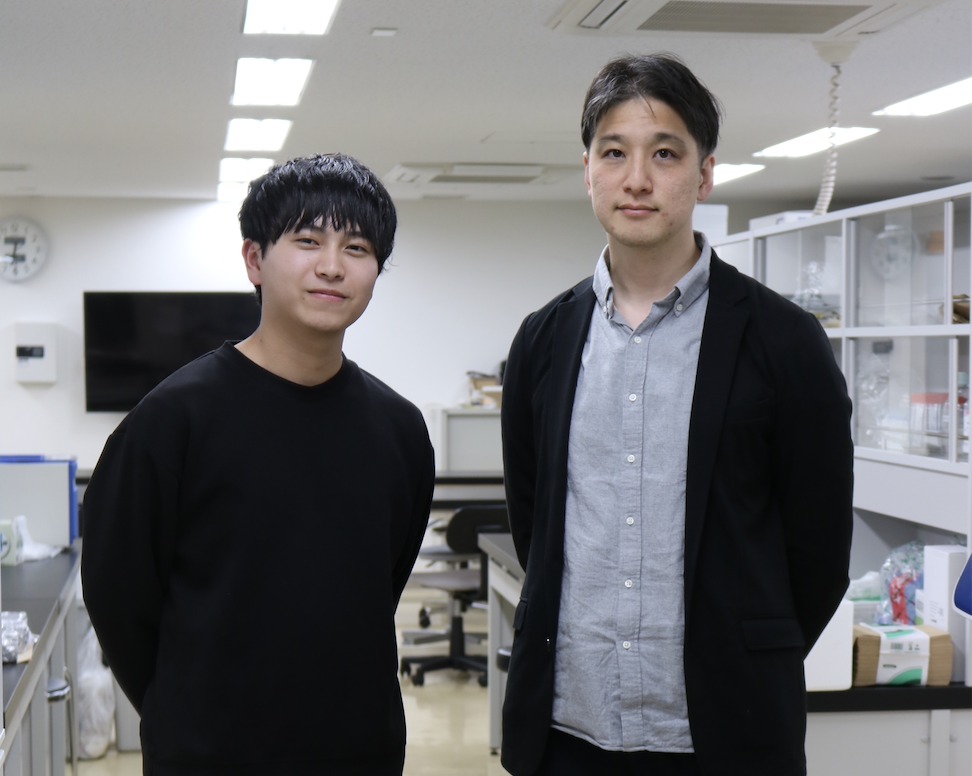
Mr. Hayate Endo
Third-year student, Faculty of Science, Tokyo Metropolitan University
From an early age, he devoted himself to collecting earthworms, and while in high school, he conducted research on earthworm systematics at the GSC (iP-U) at Utsunomiya University. He received the Japan Science and Technology Agency (JST) President’s Award at the GSC National Student Research Presentation Conference in Reiwa 2. In addition to his wide-ranging research activities both in Japan and abroad, he collaborates with numerous companies and organizations on social implementation projects using earthworms, such as “MIMIZOO,” which aims to improve animal welfare, and the “Earthworm Research Workshop,” designed to enhance the next generation’s capacity for inquiry. His dream for the future is to become the world’s leading earthworm researcher.
Interviewer
Yusuke Shinozawa
Executive Officer, Ribanes Co., Ltd.
He earned a Master of Agricultural Sciences from the Graduate School of Agricultural and Life Sciences at the University of Tokyo. After working at a PR firm in 2008, he joined Lifeness in 2009. That same year, he launched a Silicon Valley training program for graduate students. In 2013, he launched the seed acceleration program “TECH PLANTER,” establishing a framework for collaboration between large corporations and startups both in Japan and abroad, and engaging in activities such as new business creation and industry-academia collaboration projects. In 2023, he launched the Lifeness Scholarship to support student activities and began initiatives to foster entrepreneurship.
The Ribane Scholarship provides 100,000 yen to students who are struggling with thoughts like, “I want to change the world, but I don’t know where to start,” or who have ambitions such as, “This is what I want to do!” and supports their individual initiatives through three seminar sessions. In the first cohort of 2023, a total of 37 students were selected at Ribane’s Tokyo and Osaka headquarters and launched new initiatives. What are today’s students thinking, and what challenges are they taking on to change the world? And what should those supporting students do, and what mindset should they adopt? Hayate Endo of Tokyo Metropolitan University, who participated as a scholarship recipient in the first cohort, and Yusuke Shinozawa of Ribane Co., Ltd., who developed the Ribane Scholarship program, share their insights.
From Basic Research
A Challenge to Change the World
Shinohara:It's been a while—it's been since our seminar last year, hasn't it? Are you still active in that?
Endo:Yes, since then, under the banner of “Realizing ‘Living Taxonomy’ with Earthworms That Anyone Can Use,” we’ve participated in events like Ribane’s Interdisciplinary Conference and have expanded into new activities. For example, animals kept in zoos eat earthworms as food, but apparently they prefer fat earthworms to slender earthworms. So, if we succeed in raising fat earthworms, it could be a breakthrough in solving the problem of food shortages at zoos.
Shinohara:It really opened my eyes to the new possibilities of earthworms, didn't it?
Endo:It was a revelation to me that the simple fact that earthworms can be raised might lead to solutions to various problems. Of course, we still need to successfully raise the earthworms themselves, but it was very meaningful to be able to visualize—with concrete examples—how advances in earthworm research could change the world.
When I presented my research in the Livanes Scholarship seminar, the seminar leader asked me, “How is that research going to change the world?” I gave a stock answer: “Basic research can’t change the world directly, but I’m doing it because it has the potential to do so.” The seminar leader then replied, “Well, in that case, there’s no point in you being here,” and I found myself thinking, “He’s right.” I’ve been racking my brain ever since, and while I still haven’t found a clear answer, my immediate goal is to transform earthworm taxonomy into a “living taxonomy” that anyone can use, and thereby change the world of research. I can’t say I’ll change the world just yet, but my goal is to start by changing the earthworm community.
The 100,000 I earned on my own,
It boosted my confidence and motivated me to take action
Shinohara:How did you use the activity funds we gave you?
Endo:I’m using the money to cover expenses for preparing for the earthworm research workshop and for travel to meet people. The other day, I went to Iizuna Town in Nagano Prefecture to meet with representatives from a company called Mimizuya Co., Ltd. and do some preliminary research. Since Mimizuya is a company focused on revitalizing the town through earthworm-related initiatives, I’m considering whether we might be able to collaborate with them on the workshop.
Shinohara:You're a junior in college right now, aren't you? It's wonderful that you're already expanding your network beyond the university. Do you have any requests, like wanting more funding for your activities?
Endo:It’s not that I wouldn’t want more, but since this was my first experience receiving funding for my work, it’s more than enough for me right now. Actually, there aren’t many funding opportunities available to undergraduate students. While there are quite a few research grants for graduate students—and even for middle and high school students—undergraduate students seem to have been left out.
Shinohara:You’ve been conducting your own research on earthworms since high school, haven’t you? What were you doing back then?
Endo:When I was in high school, I spent three years conducting research as part of a project called the Global Science Campus at Utsunomiya University. My supervising professor at the university took care of all the research funding, so I never had to go out and secure the money needed for my research activities on my own.
Shinohara:I see. So that’s why the funding for the project gave you confidence.
Endo:That's right. It gives me confidence, and now that I have funding for those vague ideas I've had—like "I'd like to try that"—it's shifted my mindset to "I really have to make this happen." It's a kind of urgency, I guess... I feel like it's been a great motivator.
Let's dream big
Shinohara:If the 100,000 yen in activity funds, the question from the seminar leader—“How are you going to change the world?”—and the peers I worked with all helped shape Endo’s vision for the future, I couldn’t be happier. I feel that in Japan, there aren’t many opportunities for students to share their future visions and dreams and actually secure funding for them. Around 2009, I was organizing an overseas training program that took students—just like Mr. Endo—to Silicon Valley. There, I saw people articulating incredibly grand visions and dreams, and others willing to invest tens of millions of yen in those dreams. As a result, startups were born from those interactions, which have since grown into the massive corporations we see today. I, too, began supporting startups at Lifeness in 2014 and have been working to accompany researchers as they pursue their grand visions and dreams.
So what I’ve always focused on is simply “practicing how to dream big.” Of course, at first, people can’t express themselves very well. But when I engage with them with the mindset of, “Let’s practice seeing if we can make their dreams 10 times bigger,” researchers start popping up left and right, saying things like, “This is the first time we’ve really clicked.” For example, if a researcher starts saying something like, “I want to grow meat from cultured cells, and I want to feed humanity until they’re full—and to do that, we’ll need a massive cultured meat factory built on Mars,” I’ll say, “That’s interesting,” and fully embrace that dream. Since I do this kind of work all the time, when I meet young people—like Mr. Endo—who are just on the verge of making big claims, I find myself wondering, “What could I say to make their eyes light up?”
Endo:I’m good at talking about my feelings toward earthworms, but I’m not good at talking about anything else. I also used to have a hard time relying on others. In fact, even though I was the one who reached out to Mimizuya-san about the research workshop we’re holding this year, I don’t think I would have been able to do that if I hadn’t attended the Ribanes seminar. Whether it was fieldwork or experiments, I used to manage everything on my own. But when it comes to changing the world, going it alone just doesn’t cut it—ultimately, you have to get the people around you involved. In a way, as I was doing this out of necessity—even though I thought, “It’d be a bit unpleasant if I got turned down”—I decided to just go for it with a “nothing to lose” attitude. As a result, people often said, “Sure,” and that’s where my sense of unease about it started to change.
Shinohara:Sometimes, comments from others like, “Why don’t you give it a try?” can really give you a boost. So I think my role is to spur my juniors on.
The nail that sticks out doesn't get hammered down
I want to build a society
Shinohara:How did the seminar go?
Endo:There’s a one-month break between seminars, but I can’t seem to get everything ready. I want to talk to this person and that person—I want to do it all, but I’m worried that if I try to do everything, nothing will turn out right. Looking back, it was tough, but it was also really exciting.
Shinohara:Bringing together scholarship recipients who all wanted to do the same thing created a real synergy, didn’t it? There aren’t many other places where people like this can come together. It’s kind of embarrassing to say you want to “change the world,” isn’t it? After all, most people find it a hassle to try something new.
Silicon Valley attracts an unusually high concentration of highly motivated people—especially immigrants—and that, in turn, draws in money. I found that enviable, so ever since 2009, I’ve wanted to generously distribute funds to motivated individuals here at Ribane as well. That’s why we launched the Ribane Scholarship and have been awarding it to the best of our ability. I operate on the premise that as long as someone is motivated and of good character, nothing bad will happen—I take a very optimistic view of human nature. I believe there are almost no cases in Japan where people who are deeply immersed in basic research or technological development are driven solely by self-interest. So it’s safe to trust them. I want to keep investing in this. This Ribane Scholarship system will eventually completely transform society’s conventional wisdom. While shareholder returns are fine, companies should also offer scholarships. And I want to create a system that fosters entrepreneurship within companies and passes those benefits on to young people.
Endo:It really makes you feel like the world would change if that kind of movement spread, doesn’t it? The world of earthworm research would change, the world around us would change, and then the society we live in would change. A society where “the nail that sticks out gets hammered down” would gradually transform into one where individuality can truly thrive—and as a result, society would actually grow and start to function properly. I feel like a society that grinds to a halt when everyone starts asserting themselves might actually find the right balance and start functioning smoothly again.
Shinohara:Have you ever had the experience of being singled out, Mr. Endo?
Endo:I think the environment was pretty good. In elementary and middle school, my homeroom teachers would tell me to study more, but my parents and the principal understood where I was coming from and would tell me, “Go ahead and do your research however you like.” So, while I wasn’t exactly “hammered down” for standing out, I did get told I was “a bit odd” for studying earthworms. Well, in a way, maybe that’s just the nature of society.
Starting in 2022, new curriculum guidelines took effect in high schools, and they call for inquiry-based learning. Basically, teachers tell students to cultivate their genuine interests, conduct research at school, and do what they love, right? But I can’t help but think that if people who have always been the type to “knock down the nail that sticks out” suddenly start saying things like that, nothing will actually happen. That’s precisely why we absolutely need someone to serve as a bridge to researchers, and I believe that is truly an urgent issue right now.
Shinohara:You can't really get started unless you've had the experience of being recognized and praised first, right?
Endo:If society as a whole shifts toward that kind of mindset as a precursor to school, and if more children are no longer singled out for standing out, I think those children will naturally move forward on their own. I believe we need to change the atmosphere not just in schools, but in society as a whole.
Shinohara:My personal belief is that people who’ve been through similar experiences inspire each other the most, so to create a society where “the nail that sticks out doesn’t get hammered down,” it’s crucial to build momentum by increasing the number of people who’ve helped those “sticking-out nails” grow. I think we can say society has truly changed once people in the middle class start following suit. It’ll probably take about another 10 years to get there, but since I want to invest even more in Endo-kun, we’ll do our best to grow our company even further. Let’s both keep working hard!
Endo:We look forward to your continued support!
 English
 Japanese